How AI Broke the Syntax Barrier and Let Me Ship Alone


I can’t write frontend or Ruby from scratch, but thanks to AI, I can finally ship it.
Everyone is obsessed with speed. Scroll through Medium or LinkedIn, and you’ll drown in posts about how AI helps developers write boilerplate faster, finish tickets sooner, and optimize their daily grind. That’s fine, but for me, that’s the least interesting part of the AI revolution. I don’t look at AI only as a productivity booster. I look at it as an enabler.
During my path to Senior Developer and Software Architect, I gained strong architectural skills. But like everyone else, I have boundaries. There are technologies I know conceptually but struggle with syntactically. There are domains, like complex frontend interactions or obscure DevOps scripting, that I’ve always wanted to touch but never had the motivation to learn from scratch.
AI didn’t just make me faster at what I already do. It allowed me to start doing things I never would have done on my own.
The Syntax Barrier
Here is the reality of being a Senior Developer: You don’t actually need to know a language fluently to understand it.
If you give me a piece of code in a language I’ve never used, I can probably tell you what it does. I understand control flow, data structures, and architecture. I can review code in almost any language to a reasonable level.
But I cannot write it from scratch.
In the past, this was a dead end. If I wanted to build a small plugin for Redmine (which uses Ruby on Rails), I would have to stop, find a tutorial, set up the environment, struggle with syntax errors, and read documentation for three hours to write ten lines of code.
The result? I wouldn’t do it. It was a momentum killer, and it wasn’t worth the time investment for a simple internal tool or a quick prototype. Now, I do it.
Maybe I won’t come up with the most performant or elegant solution on the first try, but for these cases, it’s “good enough.” It opened the doors I needed to hop on the learning path for these new things, but from the opposite side, learning by reverse-engineering working code rather than memorizing syntax.
The Reviewer Mindset
This is where AI is changing my career trajectory. I realized my role has shifted: I now review not only my colleagues’ code but the machine’s code.
When I need something from an unfamiliar domain, a CI/CD automation script, or a frontend component, I let Cursor (my AI editor of choice) do the heavy lifting. I tell it what I want, and it spits out the code.
Thanks to the breadth of technology I’ve worked with over the years, I can look at that generated code and instantly judge it. I might not know the specific command to reverse a list in Ruby, but I know if the logic is sound. I know if error handling is missing. I know if the variable names make sense.
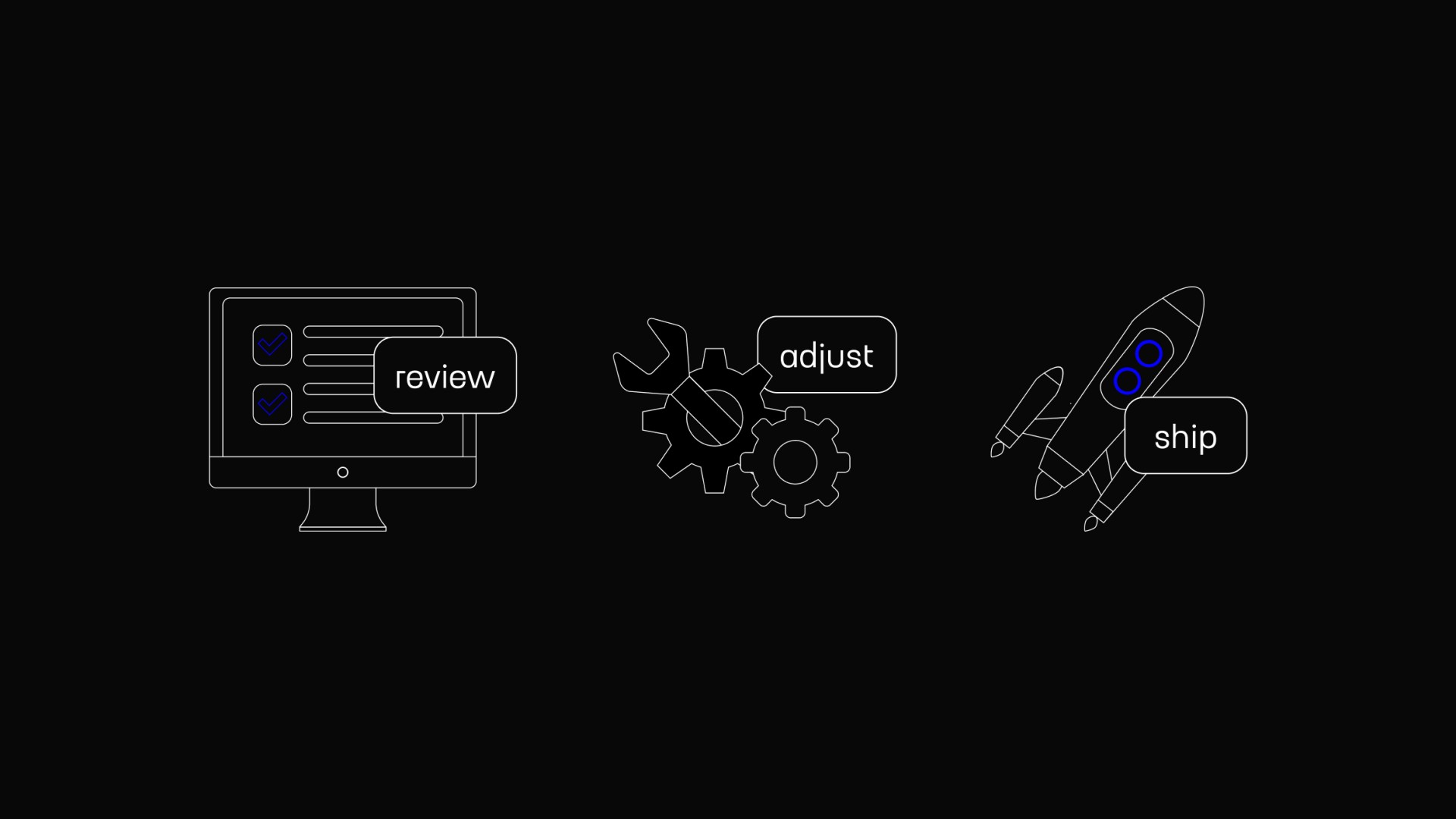
I review it, I adjust it, and I ship it.
Expanding Boundaries
This workflow has allowed me to become independent in areas where I used to rely entirely on others.
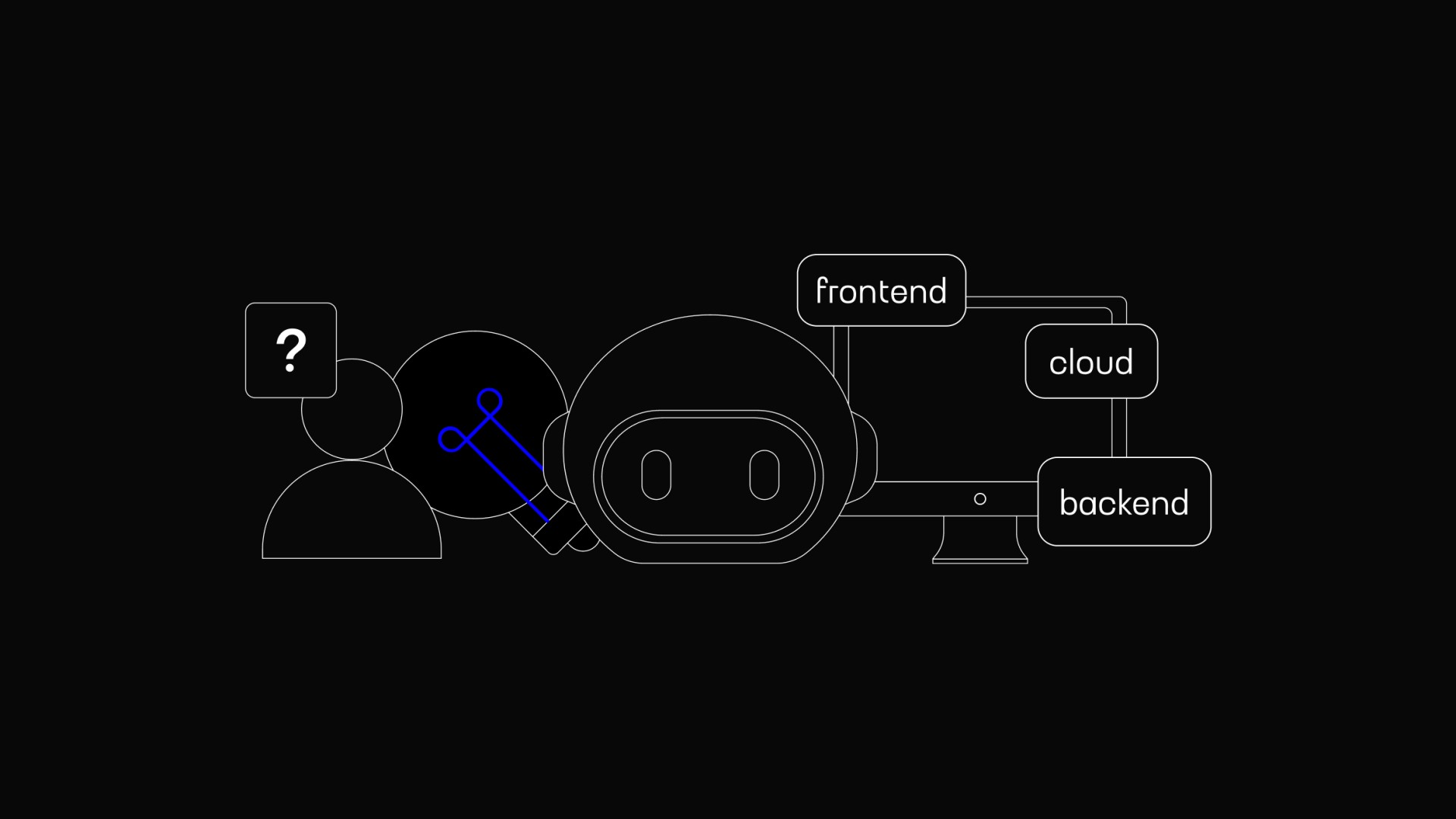
- Frontend Independence: I’ve started shipping small features completely alone. A dashboard tweak here, a form validation there — things that would have required waiting for a frontend colleague before. I don’t get stuck centering a div or remembering React hooks syntax. I describe the result, and I tweak the code until it works.
- DevOps & Automation: I’ve gotten into complex CI/CD scripts and workflow automations that I previously found too tedious to implement and debug manually.
- New Ecosystems: I recently wrote a few Ruby plugins for Redmine. Before AI, I had zero interest in learning the Ruby ecosystem deeply. Now, I have a working product and a basic understanding of Ruby.
- AI Engineering: Since I’m implementing AI automations, I’m actually learning the bleeding edge of AI tech daily. I’m diving into tool use, setting up MCP (Model Context Protocol) servers, and even experimenting with fine-tuning.
The Prototype Machine
There is a specific type of project that always died on the vine for me: the “Proof of Concept.”
Sometimes I have an idea for an experiment. I don’t want to learn the technology deeply; I want the result. I want to see if it works.
Now, I let the AI handle the implementation while I work on my actual tasks. It runs in the background. I come back, check the results, learn from the output, and refine.
Suddenly, I have a new product - a new automation, a mini-feature for an internal project, or a proof of concept - created with zero “study time.”
Conclusion
If you are a senior dev, stop worrying about AI taking your job. Instead, look at the backlog of ideas you shelved because you “didn’t have the time to learn X.”
Use AI to bridge the gap between your architectural knowledge and your syntax gaps. It’s not about typing faster. It’s about expanding your territory.