Building in Tech: Designing with Purpose


We continue this series with Vladi, our Product Designer - someone who started her tech journey with a highway daydream about an app, taught herself Android development to make it a reality, and found her true calling in product design, where curiosity, precision, and a deep sense of purpose drive everything she creates.
You've been at Touch4IT for 8 years, and in tech for 12 years. How do you remember your beginnings?
My beginnings in the tech industry were, of course, very rough, as beginnings tend to be. Before that, I was working more in visual design. One day, while driving on the highway, I came up with an idea for an app (which I still think would have been really awesome). I decided to get it priced by a local company. The quote came to €25,000, which was an unimaginable sum for me at the time. So I told myself I'd learn to code and build it myself.
Long story short, I got a scholarship for an Android app development course. After 9 months of studying alongside work, I successfully completed the course and gained the confidence to apply to a real tech company.
At the time, I was being considered by several companies, but after the interview at Touch4IT, I was invited to our Monday Meeting (regular all-hands meeting), and that's when it became pretty clear to me. I remember getting a very strong feeling from that atmosphere that I was among people who shared my values. They were passionate about what they were doing; they wanted to work hard, build things, push them forward, and you could feel that they genuinely cared about their work. It had that healthy start-up vibe that I loved at the time - a lot of energy, enthusiasm, and desire to build something.

My choice for Touch4IT was clear. After the Monday Meeting ended, I got in my car and called the other companies to say I'd chosen a different company. I have to admit, my mindset back then was overly motivated. I wanted to spend days and nights creating something valuable and super interesting. I wasn't hired as an Android developer (luckily), but because I had previously worked in visual design and already knew something about mobile and web development, UX/UI design was the best fit.
Later, my role gradually evolved into product design, which I'm currently very happy with and where I can fully use my strengths. The beginnings demanded a lot of hard work, sleepless nights, and time spent learning, but I don't regret a single minute of my journey.
What were you most afraid of, and later perhaps found it wasn't as terrible as you thought?
I was most afraid of presenting my work in front of senior colleagues and, of course, in front of clients - especially the English-speaking ones. I remember preparing for hours for those meetings! Talking about my work wasn't the problem. What was rough for me then was the skill of communication itself.
Over time, I learned to structure meetings better, name ideas more clearly, and communicate my work in a way that's understandable even to people outside the product design context. I finally managed that because I stand behind my work. I wouldn't present something I knew I'd rushed or done insufficiently.
As I mentioned, a particular challenge for me was working with English-speaking clients. We all probably know that feeling of understanding everything in English while watching a movie or listening to music, but speaking and reacting in real time is a completely different level. Today I work exclusively for English-speaking clients, and I have much greater confidence in myself. I still think preparation is important, but it's no longer about stressing over whether I can manage. It's more about how to best communicate the value of the work I bring.
Where do you see the biggest differences between your first year at the company and today?
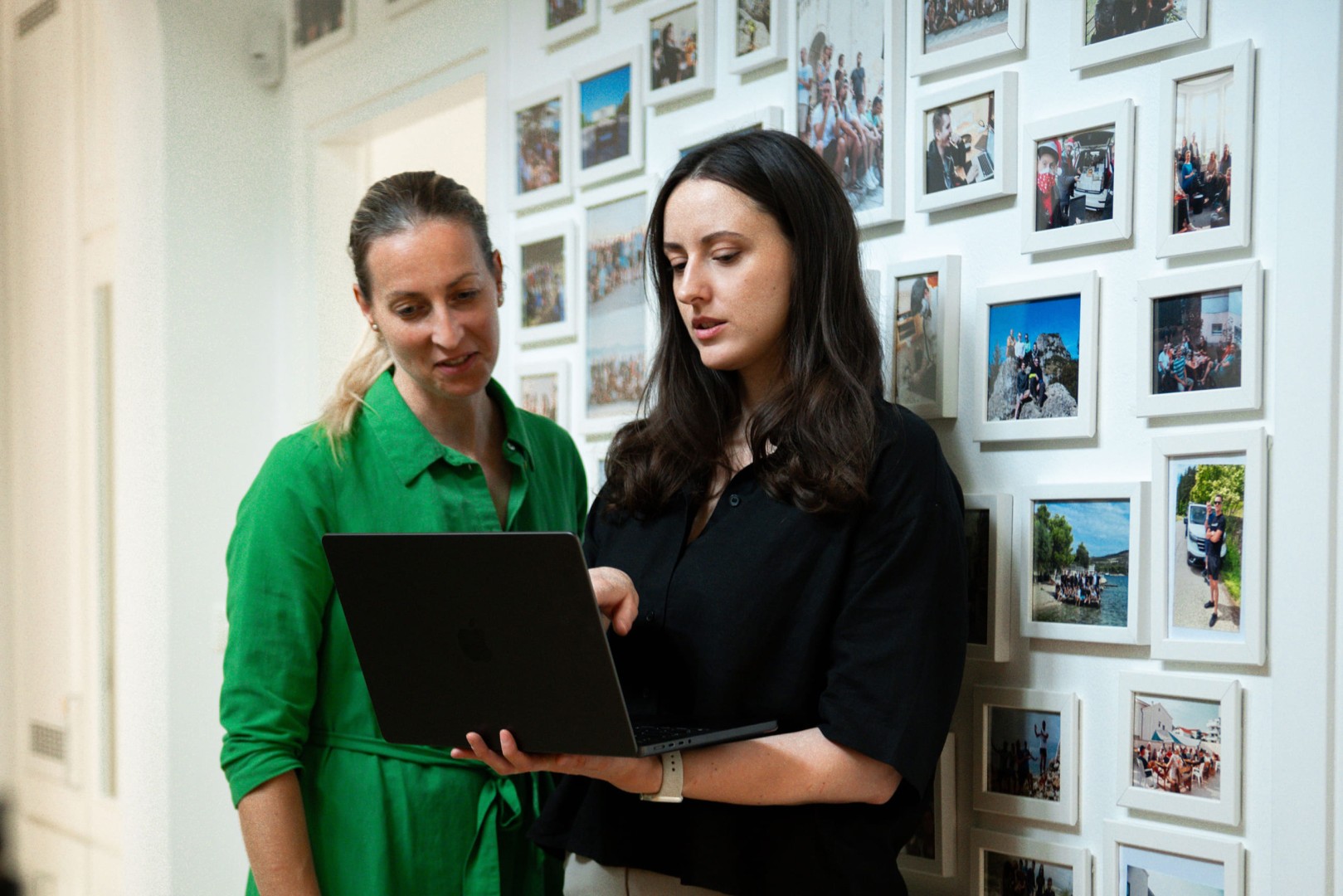
I definitely see the biggest difference in team dynamics and, of course, in my own experience. When I joined T4, the company was only 4 years old, and most colleagues were fresh out of school. We had a friendly, collegial relationship where we could work hard and still have fun together after work. My first year at the company was a beautiful era, and that chapter of my life will always hold a special place.
Today, our team dynamics are much more professional. The team has grown several times over, and the company's overall operations have become much more professional. I think the company and I naturally evolved together. Together, we gained professionalism, experience, and responsibility. And of course, after years in the tech industry, work-life balance is very important to me, which, honestly, I wasn't managing to maintain at all at the beginning. 😄 After several personal challenges, however, I pay much more attention to it. I think it's a very important part of the whole job. Not to sprint and burn out, but to manage to run the marathon.
What does career progression mean to you as a woman in tech? Is it more a new title, a completed project, newly acquired skills, or the moment you say to yourself, "OK, I'm in the right place, and I feel useful here"?
For me personally, career progression is very important. Not in the sense of "climbing positions," but more in the sense of constantly improving at what I do and not staying in one place for too long. The IT sector moves very fast, and it's important to keep up. I personally find this very fitting because I'm constantly hungry for new information and new things to learn. I think we can give ourselves all sorts of job titles today, but the title itself isn't that significant to me.
What matters more is whether I'm still improving in my work and whether it's moving me forward both professionally and personally. At the same time, it makes sense to me for my position and the content of my work to transform over time based on what makes sense to me, what fulfills me, what the company needs, and what the market demands. This combination is probably the most important to me, and I often reflect on my development through these four aspects. Of course, it's also very important to me to feel good and useful at work. Without that, I'd probably already be somewhere else. And since the question speaks about progression "as a woman in IT," I have to say that I really hope we'll one day reach a point where we no longer need that formulation. We usually don't ask men what career progression means to them "as men in IT." Ideally, we'd be able to talk about it simply as people in IT, without gender needing to be a separate category. At the same time, I understand we're not there yet, which is why these topics still matter.
What should career development in tech companies look like?
Development in tech companies should be an active part of every company. At the same time, the company must also create real space for that development. After all, each of us has a personal life too, and sometimes it's harder to manage everything at once.
I therefore picture healthy development in a tech company as a combination of a person who wants to move forward and a company that creates the conditions for that person to do so. It won't always be exactly 50/50, of course, but when that combination works, it adds value for both the individual and the company. If people don't have space to develop, they'll often leave for a place where they can. And if a company doesn't support development long-term, the people who remain may largely be those who don't particularly care about it anyway.
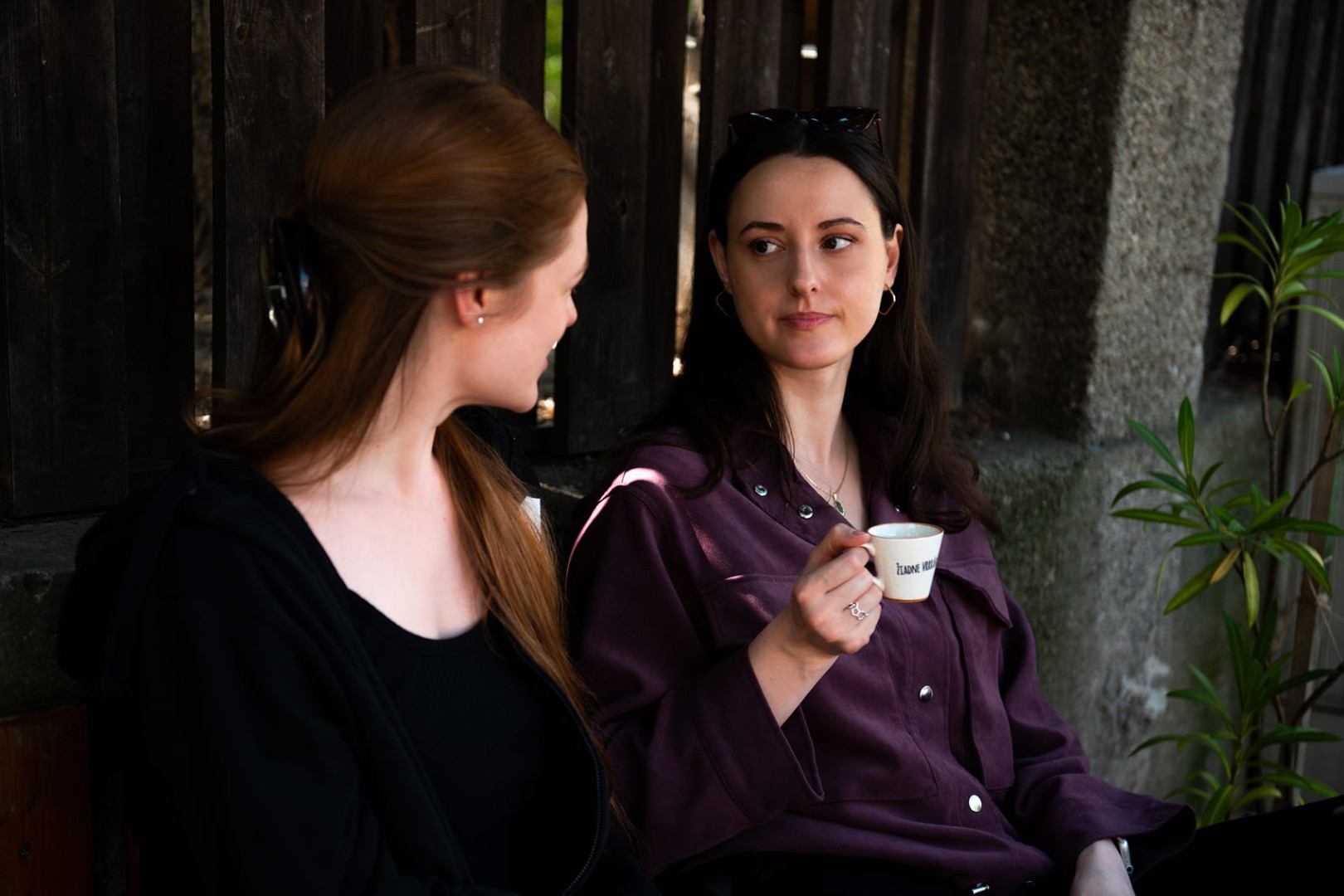
If you were having a coffee today with a woman who's thinking about working in tech but doubts herself, what would you tell her from your own experience?
I'd tell her that doubt is a completely natural part of any growth. It doesn't only come at the beginning; it can appear at any time. What matters is that it doesn't stop us completely if we feel a given direction makes sense to us.
I'd also tell her not to be put off by the fact that the tech industry can at first glance seem like a predominantly male environment. I understand that for some people, that can be a barrier or a source of insecurity. However, I think that a great strength of the women-in-tech community is precisely that we talk about these things more openly. Together we're better at naming what is and what isn't okay anymore, what language we use, what behavior we tolerate, and what boundaries we set for ourselves as professionals.
In the women-in-tech community, one often finds great support because many of us are very sensitive and conscious about these topics. Not to create a bigger divide between men and women, but quite the opposite, so that we eventually reach a point where such a divide doesn't need to be addressed at all.
From personal experience, I'd also tell her that the beginnings don't have to be easy. There will likely be XY moments when she tells herself it's too much for her. But you have to look at it a bit like a stock market curve: on a small scale, there are ups and downs, but on a larger scale, the curve is still going up (laugh). So I'd tell her not to be put off by moments of failure. And above all, not to be put off by people. Even bad feedback, you have to learn not to take personally, but to see as data showing where you can still improve and grow. Nobody else knows her potential as well as she does.
What do you enjoy most about working in tech?
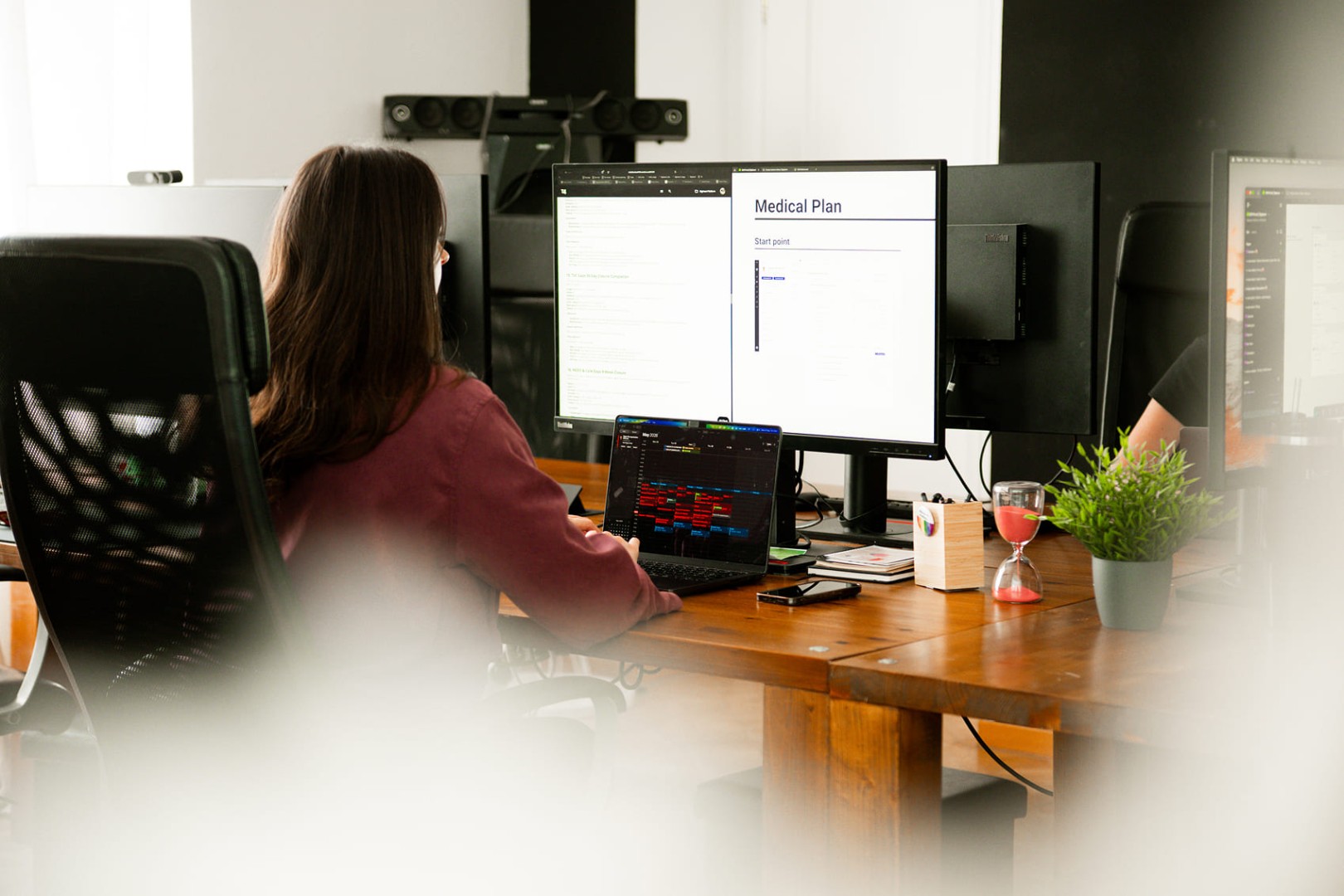
What I enjoy most about working in tech is that feeling when we've been thinking for a long time about solving some problem, a thousand ways to approach it are rotating in our heads, and we finally come up with a solution that's efficient, smart, and makes sense. And often in the process itself, where most people don't even understand what we're actually doing (laugh).
I really love that feeling of satisfaction. At the same time, what I love about tech is that this field never sleeps. Something new is constantly emerging, technologies are moving forward, and we get to watch that up close and even be an active part of that development. I really like the dynamics of this field. The fact that it's not easy is precisely why it's still alive and interesting, and it keeps pushing you to think further.
What do you consider your biggest personal challenge in tech?
My biggest personal challenge in tech is probably immersing myself not only in tech but also deeply in the healthcare sector.
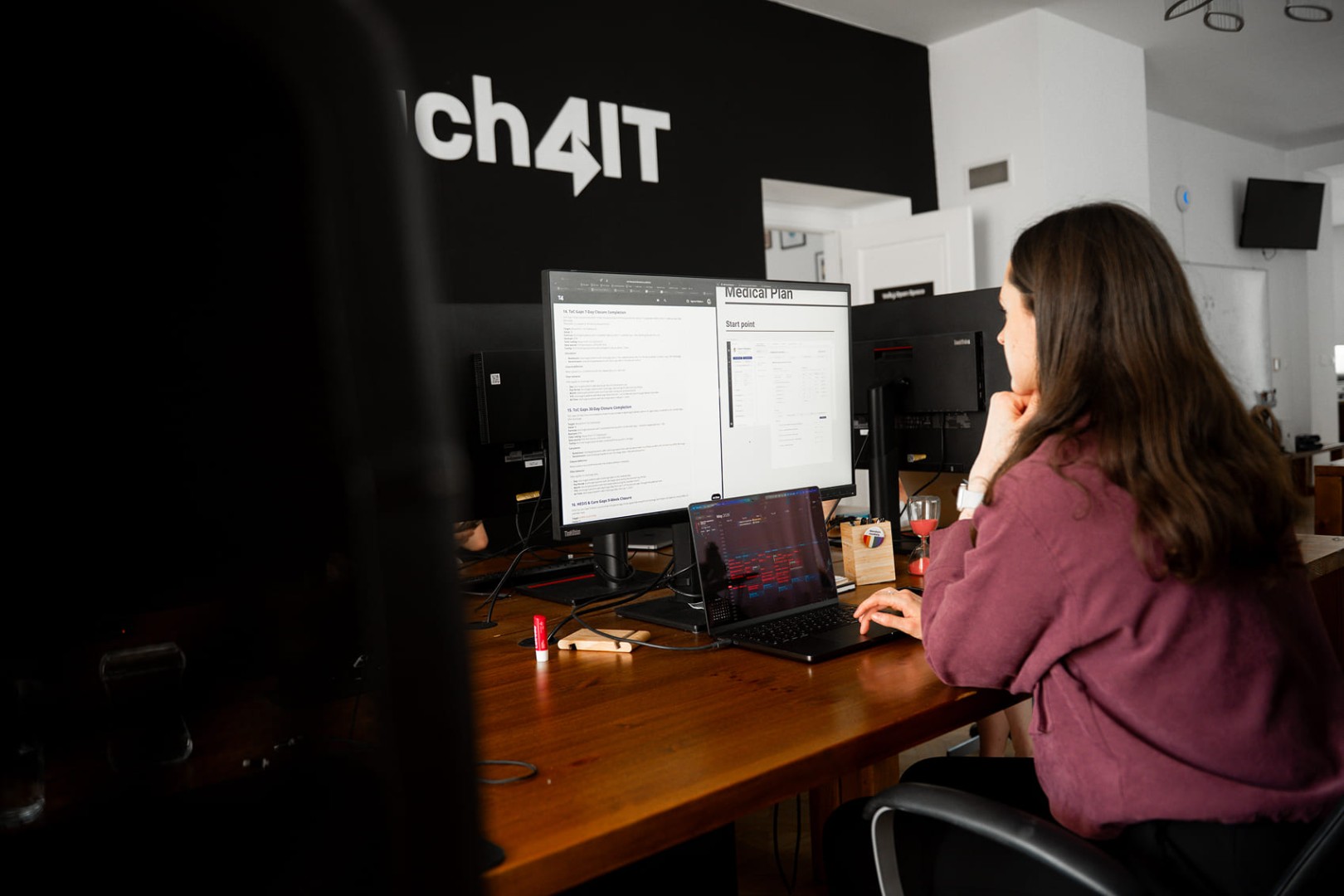
For the past several years, I've been working on the BigHeart project. From the very beginning, we created an EHR system that now has thousands of users. At first, I didn't yet realize I'd stay in this area for so long, but the longer I work on the project, the more I realize how much this combination of product, technology, and healthcare fulfills me. Because we're building an EHR system for the American market, a big challenge for me was learning how healthcare works there specifically.
In many ways it's different from what we know here. I was (and still am) encountering terms, names, and processes I didn't know. I had to Google many things, research them, learn them, and most importantly, understand their real meaning. Sometimes a simple translation isn't enough because behind a single word there can be an entire process we simply don't use here.

When designing such a system, therefore, it's not enough to just "make a screen." You need to understand how those people actually work, what their processes and limitations are, and how to address their needs in the EHR system as simply as possible. A big challenge for me was also learning to function in such a large and complex project within a larger team.
As a product designer, I also largely prepare requirements for developers, who then implement the functionality based on them. This requires a great deal of responsibility, because if something isn't named or thought through clearly enough, it can very quickly transfer into development. And even after years, it's still similar. Every new request from the client may involve a new process in American healthcare that I first need to learn and understand, and only then design a solution.
Part of that also involves active meetings with the client, who not only assigns what needs to be done but also explains the context, processes, and how things work in practice. I also greatly value our collaboration with the BigHeart client. Over the years, we've built a strong, trusting relationship, which I think is extremely important for a product this complex.
When someone is designing a system for an area they have to learn a great deal about, they need people on the other side who can explain not only what they need, but also why they need it and how it all works in practice. It's precisely thanks to this collaboration that I was gradually able to get much deeper into the context of American healthcare, and I'm not just working on individual tasks - I'm working on a product I truly understand and care about. The longer I work in this area, the more I feel it still excites me, gives me meaning, and I want to continue in it. I have a very good feeling that we're creating a product that, somewhere in another part of the world, genuinely helps people. That's a very significant part of my work. I need to work on something that has value and meaning for me. Otherwise, I probably couldn't do it long-term.