Europe’s Technological Sovereignty and the Role of Private Cloud Infrastructure


Europe has been talking about digital sovereignty for years. In 2026, legislation is making it a concrete business decision, and companies that start addressing it now will avoid major challenges later.
Why Is This Important?
Whoever owns the infrastructure also owns the rules. Europe has finally realized this and, in 2026, is moving from words to action. Three American companies still control 65–70% of the European cloud market (European DIGITAL SME Alliance; Broadcom, January 2026), while more than 80% of digital technologies used in the EU originate outside Europe (European Parliament/ITRE, December 2025). For companies that host sensitive data or work with the public sector, this is not just a statistic. It represents a growing regulatory and reputational risk.
In this article, we explain why Europe’s digital dependency is becoming a business risk, what we are doing to address it, and why it makes sense to address it before regulation arrives.
Europe & the Cloud
For years, this topic was mainly the domain of technology conferences and discussions in Brussels. In 2026, that changed. In January, the European Parliament adopted a resolution on technological sovereignty with a vote of 471 to 68 (europarl.europa.eu, January 2026), moving the debate from theory to action.
What is driving this pressure? Simply put: excessive dependence on infrastructure outside Europe’s control. When three American companies dominate most of the European cloud market, and the majority of digital technologies are imported, every geopolitical tension and every change in U.S. legislation or policy immediately impacts European companies and their data.
Europe’s response is taking a concrete form. In the summer of 2026, the Cloud and AI Development Act is expected to introduce the first legislative definition of a “sovereign cloud” in the EU and establish certification rules for providers (ECDPM, May 2026).
Regulatory pressure is also increasing from a cybersecurity perspective. With frameworks such as NIS2, infrastructure resilience and risk management are becoming board-level concerns. Executive management is expected to actively oversee cyber risks, with penalties for non-compliance up to €10 million or 2% of annual global turnover.
At the same time, European companies are significantly increasing investments in sovereign cloud infrastructure. According to Gartner, spending in this area is growing by 83% year over year (Gartner / Data Center Dynamics, March 2026). The market is clearly moving.
For businesses, this means one thing: companies that solve their infrastructure strategy today will have a significantly easier path once regulation arrives.
What We Built and Why It Matters
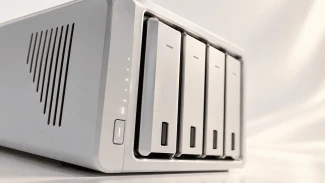
Touch4IT Private Cloud is an infrastructure we designed, built, and operate ourselves on European soil under European law, with full responsibility managed by our own DevOps team. Our approach is supported by ISO 27001, ISO 9001, and ISO 14001 certifications, along with EU and NATO security clearances, enabling us to support highly regulated environments.
To support these requirements, we decided to build and operate our own private cloud infrastructure rather than relying solely on third-party hyperscaler platforms.
From a technical perspective, this means modern Kubernetes environments (Rancher 2.x) with separated development, testing, and production layers, dedicated database clusters, monitoring, and backup systems.
For legacy projects still running on Docker/Rancher 1.x environments, we maintain an active migration program, not because we have to, but because long-term reliability requires it.
For clients, this brings several practical benefits:
- Data stays within the EU. No transfers to jurisdictions outside the European legal framework and no uncertainty around GDPR compliance.
- Control remains on our side. Monitoring, access management, and incident response are handled by our own specialists, not by a distant hyperscaler support team.
- Reduced vendor lock-in.
- Infrastructure designed for compliance from the ground up. Not added later as an afterthought.
Beyond compliance, organizations often discover that sovereignty and economics go hand in hand. Depending on workload characteristics, companies can typically reduce the total cost of ownership by around 50% compared to optimized public cloud environments. For heavily underutilized or poorly optimized hyperscaler deployments, savings can reach 80–90%.
A practical example? Our infrastructure supports platforms used by organizations operating across multiple EU member states, where security, availability, and regulatory compliance are critical requirements.
Importantly, sovereignty does not require an all-or-nothing migration. For organizations already invested in hyperscaler platforms, a hybrid approach often provides the most practical path forward. Critical workloads can gradually move into sovereign infrastructure while existing cloud investments continue to deliver value.
Why Now?
European sovereignty is being built through the decisions thousands of companies make about where they place their data and infrastructure. In many ways, 2026 is becoming a turning point.
Regulation is evolving, client expectations are increasing, and investment in European cloud solutions continues to accelerate.
Companies that start addressing this today are effectively buying themselves time. Those who wait for regulation will likely face pressure on migration projects, with higher costs and greater operational risk.
Touch4IT Private Cloud is our response to this challenge. Not as a marketing claim, but as infrastructure already running in production, both internally and for our clients.
Not sure whether your current infrastructure is ready for upcoming regulatory, security, or sovereignty requirements?
We can help through an infrastructure, security, and compliance gap assessment that identifies potential risks, compliance gaps, and opportunities for optimization. Contact us to discuss your current environment and available options.