How Care Plans and Episodes of Care Work in Healthcare Software


A patient with diabetes may visit their primary care physician several times a year, receive laboratory tests, speak with a care coordinator, participate in a disease management program, and receive support from a community health worker. Each interaction generates information, but healthcare organizations need a way to connect these activities to the patient's treatment goals and understand whether the overall approach is working.
This is where care plans and episodes of care become important. Both are widely used concepts in US healthcare, particularly in chronic disease management, care coordination, and value-based care programs. They help healthcare organizations organize patient information, coordinate activities across different professionals, and evaluate the services delivered over time.
Although the concepts are closely related, they serve different purposes. A care plan defines what the healthcare team is trying to achieve and which activities should support those goals. An episode of care groups the encounters and services associated with a particular condition or period of treatment. Together, they provide a more complete view of the patient's healthcare journey.
For digital health companies developing electronic health records (EHRs), care management platforms, or patient engagement applications, these concepts introduce important requirements around data structures, clinical workflows, task management, and interoperability. Understanding how they work in practice is essential for building software that supports healthcare delivery rather than simply documenting individual appointments.
What Is a Care Plan in Healthcare?
A care plan is a structured approach to managing a patient's health needs. It identifies the conditions or problems being addressed, establishes goals, and defines the activities that healthcare professionals, support staff, and sometimes the patient will undertake to achieve those goals.
Care plans are particularly relevant when treatment involves multiple activities over an extended period. A patient managing a chronic condition may require medication, laboratory monitoring, lifestyle changes, regular consultations and additional support between appointments. Without a coordinated plan, these activities can become disconnected, making it difficult for the healthcare team to understand what has been completed and what still requires attention.
Consider a patient diagnosed with type 2 diabetes. The physician may establish a goal of reducing the patient's HbA1c level to an individualized target, such as below 7%, where clinically appropriate. Achieving that goal may involve regular blood glucose monitoring, medication management, nutritional counseling, physical activity, and follow-up appointments. Some patients may also require assistance with food access or other circumstances that affect their ability to follow treatment recommendations.
A care plan brings these activities together and connects them to a measurable objective. It allows healthcare teams to document the intended approach, assign responsibilities, and evaluate progress as the patient's circumstances change.
The Difference Between a Care Plan and a Medical Record
An electronic medical record contains information about a patient's medical history, diagnoses, medications, laboratory results, encounters, and other clinical events. It documents what has happened during the patient's care.
A care plan uses relevant information from that record to organize what should happen next. For example, a laboratory result may indicate that a patient's diabetes is not adequately controlled. The care plan can establish a treatment goal, identify the activities required to improve control, and assign those activities to appropriate members of the care team.
The distinction becomes important when several professionals are involved. A physician may adjust medication, a nurse may monitor clinical measurements, and a community health worker may help the patient access healthier food. Each activity can be documented separately, but the care plan explains how those activities contribute to the same treatment objective.
For healthcare software developers, this means care plans should be connected to the patient's broader clinical record while maintaining their own goals, activities, responsibilities, and progress information.
The Core Components of a Healthcare Care Plan
Although care plans vary by clinical setting and patient population, several elements are particularly important for supporting care coordination through software.
Patient Conditions and Identified Problems
Care planning typically begins with a condition, diagnosis or problem that requires attention. This could be a chronic disease such as diabetes, a behavioral health condition, a rehabilitation need, or another issue affecting the patient's health.
A patient may have multiple conditions requiring different approaches. For example, someone with diabetes and hypertension may need goals related to blood glucose control, blood pressure management, medication adherence, and lifestyle changes. These goals may be managed within a coordinated care plan, with each linked to the relevant condition or problem.
Connecting care plans to structured clinical information helps healthcare organizations understand why particular interventions were initiated. It also allows care teams to identify which goals and activities relate to specific diagnoses rather than treating every task as an isolated action.
Measurable Goals and Target Outcomes
A care plan should define what successful treatment or management is expected to achieve. Goals may involve clinical measurements, changes in patient behavior, improved access to services, or other outcomes relevant to the patient's condition.
For a patient with diabetes, a goal might be to reduce HbA1c to an agreed target. For someone with hypertension, it could involve maintaining blood pressure within an individualized range. Other goals may focus on attending scheduled appointments, improving medication adherence, or completing a recommended treatment program.
Whenever possible, goals should be measurable and associated with a timeframe. This allows the healthcare team to compare the patient's current condition with the intended outcome and determine whether the care plan needs to be adjusted.
From a technical perspective, the software must distinguish between the goal itself, its target value, and the observations used to evaluate progress. A goal to improve HbA1c control, for example, may be linked to laboratory results recorded at different points in time. Maintaining that relationship makes it possible to evaluate whether the interventions are producing the desired clinical changes.
Activities and Interventions
Once a goal has been established, the care team identifies the activities intended to support it. These may include medical treatment, monitoring, patient education, behavioral interventions, referrals, or other forms of assistance.
Returning to the diabetes example, the care plan may include monthly blood glucose reviews, medication follow-up, enrollment in a diabetes management program, and conversations about physical activity. A community health worker may also help the patient identify affordable food options or connect with a local assistance program.
These activities may involve several people working in different departments or organizations. Some require direct clinical involvement, while others are handled by care coordinators, engagement specialists, or community health workers. The care plan provides a shared structure for organizing their contributions.
Importantly, each activity should connect to the goal it is intended to support. This allows the healthcare organization to understand why the activity was included and whether it remains relevant as the patient's condition changes.
Assigned Responsibilities and Activity Status
Care plans become difficult to manage when activities are documented without clear ownership. If a patient needs nutritional counseling, someone must be responsible for arranging it. If a follow-up laboratory test is required, the healthcare team needs to know who will schedule or review it.
Healthcare software should therefore support assigning activities to responsible individuals or teams. It should also track their status so that users can distinguish between work that is planned, in progress, completed, or no longer appropriate.
For example, a care coordinator may be assigned to contact a patient about enrollment in a diabetes management program. The activity could initially be marked as pending, then updated after the patient has been contacted. If the patient declines participation, the outcome should be documented rather than leaving the task indefinitely open.
These details are important because care management often involves many small activities distributed across several professionals. Without reliable task ownership and status information, healthcare organizations may struggle to identify outstanding work or understand why a patient's care plan is not progressing.
How Care Plans Support Chronic Disease Management
Chronic disease management is one of the clearest examples of why structured care planning matters. Conditions such as diabetes, hypertension, and heart failure often require ongoing monitoring and coordinated interventions rather than a single course of treatment.
A patient may interact with the healthcare system repeatedly over months or years. Laboratory results, medication changes, consultations, and patient-reported information can all influence the treatment approach. The care plan helps organize these interactions around a consistent set of objectives.
Example: Managing a Patient With Diabetes
Imagine a patient with type 2 diabetes whose HbA1c is above the target agreed with their clinician. The healthcare team develops a care plan that includes medication management, regular monitoring, nutritional support, and follow-up appointments.
The physician is responsible for evaluating treatment and adjusting medication when necessary. A nurse or care coordinator may monitor whether the patient completes laboratory testing and attends scheduled appointments. An engagement specialist may contact the patient between visits to discuss participation in the treatment program, while a community health worker may address practical barriers such as limited access to appropriate food.
Each activity contributes to the broader goal of improving diabetes management. As new laboratory results become available, the care team can evaluate whether the patient's condition is improving and whether the existing interventions remain appropriate.
If the patient continues to experience difficulties, the care plan may need to change. The team might increase follow-up frequency, reconsider the treatment approach, or identify additional support needs. The software should preserve the history of these changes so that healthcare professionals can understand how the plan has evolved.
Why Care Plans Need to Change Over Time
A care plan should reflect the patient's current needs rather than remain fixed after its initial creation. Clinical conditions can improve or deteriorate; patients may encounter new barriers, and interventions may prove more or less effective than expected.
For example, a patient initially managing diabetes through medication and lifestyle changes may later require additional monitoring or specialist involvement. Alternatively, a patient who has achieved stable control may no longer need the same intensity of follow-up.
Healthcare applications therefore need to support reviewing and updating care plans, modifying goals, adding or discontinuing activities, and recording progress over time. Users should be able to understand the current plan while retaining enough historical information to explain previous decisions and interventions.
This is especially important in care management programs where multiple professionals may work with the same patient over an extended period. A newly assigned care coordinator should be able to understand the patient's goals, recent activities, and outstanding needs without reconstructing the entire treatment history from individual clinical notes.
How Different Healthcare Professionals Use Care Plans
Care plans often involve professionals with different responsibilities and levels of access to clinical information. A physician, nurse, care coordinator, and community health worker may all contribute to the same patient's care, but the activities they perform within the software can differ considerably.
Physicians and Clinical Providers
Physicians and other clinical providers use care plans to establish treatment objectives, determine appropriate interventions, and evaluate clinical progress. They may review diagnoses, medications, laboratory results, and previous encounters before deciding whether the plan needs to change.
A provider treating a patient with diabetes may review recent HbA1c measurements, assess medication effectiveness and recommend additional interventions. The care plan should make it possible to connect those decisions to the patient's documented goals and ongoing treatment activities.
Clinical providers also need access to relevant documentation from other members of the care team. If a community health worker identifies a transportation barrier that prevents the patient from attending appointments, that information may influence the physician's approach to follow-up care.
Nurses and Care Coordinators
Nurses and care coordinators frequently manage the operational activities required to implement a care plan. They may schedule follow-up appointments, contact patients, monitor outstanding tasks, coordinate referrals, and ensure that recommended activities are completed.
Their work often involves tracking several patients simultaneously, each with different conditions, goals, and outstanding activities. A care management application should help them identify which patients require attention, which activities are overdue and which interventions need follow-up.
For example, a care coordinator may need to identify patients who have not completed recommended laboratory testing or have missed follow-up appointments. Rather than reviewing every patient's record individually, the software can organize relevant tasks and statuses to support day-to-day coordination.
Community Health Workers and Engagement Specialists
Community health workers and engagement specialists may contribute to care plans by addressing practical barriers, supporting patient engagement and coordinating services outside the clinical setting. Their responsibilities can include outreach, education, referrals, and assistance with social needs.
These users often require a more limited clinical view than physicians or nurses. They may need access to relevant patient information, care plan goals, assigned tasks, and previous outreach documentation without having permission to view or modify every part of the medical record.
For example, a community health worker supporting a patient with diabetes may document a conversation about food insecurity and arrange assistance through a community organization. That activity can be linked to the patient's broader care plan so the clinical team understands what support has been arranged.
Role-based access is therefore an important consideration in care plan software. Different professionals need enough information to perform their responsibilities, while sensitive clinical data should remain accessible only to appropriately authorized users.
How Care Plan Management Works in Healthcare Software
Supporting care plans in software requires more than providing a text field where clinicians can describe treatment recommendations. The application needs structured information that connects patient conditions, goals, activities, responsibilities, and outcomes.
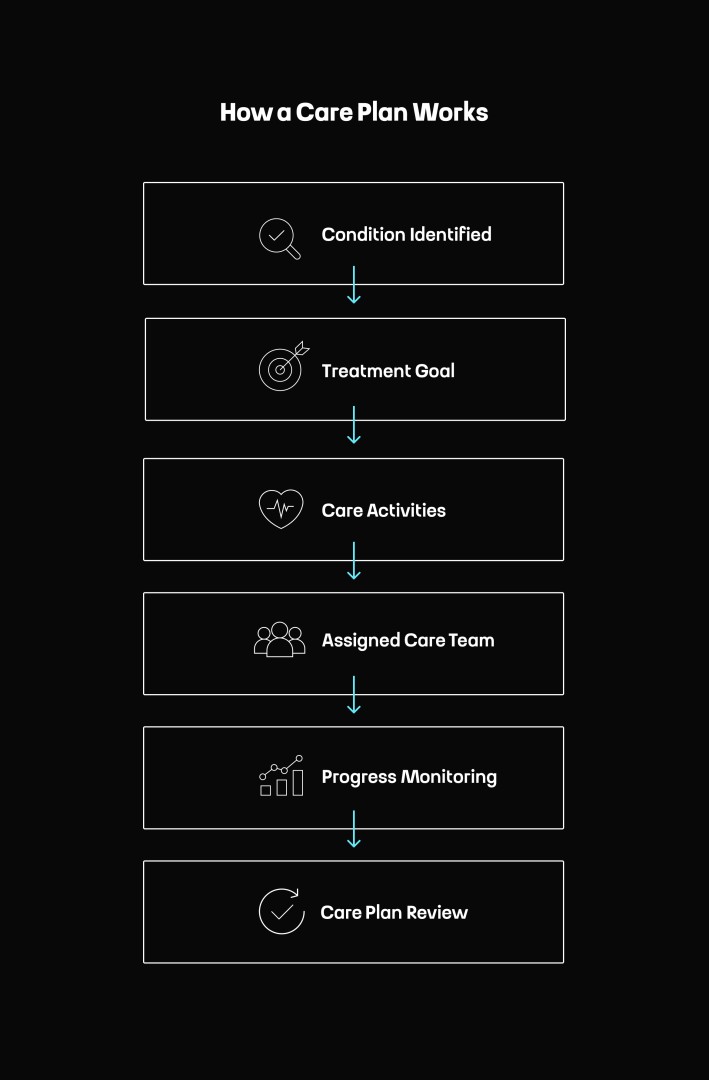
A typical care plan workflow begins when a healthcare professional identifies a condition or problem requiring coordinated management. The professional establishes one or more goals and defines the activities intended to achieve them. These activities are assigned to appropriate members of the care team, who document their progress as they work.
As new information becomes available, the care team reviews the patient's progress and updates the plan when necessary. The software should make these changes visible to authorized users and preserve the relationship between the patient's goals and the activities performed.
Connecting Goals, Tasks and Clinical Measurements
One of the central technical requirements is maintaining clear relationships between different types of information. A goal may be associated with a particular diagnosis, several activities may contribute to that goal, and clinical observations may be used to determine whether it has been achieved.
For example, a diabetes care plan may contain a goal related to HbA1c control. The goal may be linked to activities such as medication review, nutritional counseling, and laboratory testing. The resulting HbA1c measurements provide information that can be used to evaluate progress.
These relationships become particularly valuable when healthcare organizations need to analyze care delivery across larger patient populations. If goals, activities, and results are stored consistently, the organization can examine which interventions were performed and how patient outcomes changed over time.
However, the software must also preserve the clinical context. Completing an activity does not necessarily mean that the associated goal has been achieved, and improvements in a clinical measurement cannot automatically be attributed to one intervention. Care plan reporting should distinguish between the work performed and the outcomes observed.
Supporting Multiple Activities Across Different Teams
A care plan may involve numerous activities at different times and with different professionals. Some activities are completed during a clinical encounter, while others occur through telephone calls, remote monitoring, patient outreach, or coordination with external organizations.
The application needs to support this variety without forcing every activity into the same documentation process. A physician reviewing laboratory results may require a different workflow from a community health worker documenting a referral or a care coordinator following up on a missed appointment.
At the same time, these activities need to remain connected to the patient's overall plan. Healthcare teams should be able to understand which goals are being addressed, which interventions are underway, and where additional attention is required.
This is one reason care plan management can become technically complex. The underlying data relationships may be straightforward in principle, but the application must accommodate different user roles, documentation requirements, and operational workflows while maintaining a consistent view of the patient's care.
Why Care Plans Alone Do Not Tell the Full Story
A care plan provides a structured view of treatment goals and the activities intended to achieve them. However, healthcare organizations also need to understand how the patient's actual interactions with the healthcare system relate to a particular condition or course of treatment.
A patient may have several medical conditions and receive many services during the same period. Some encounters may relate to diabetes management, others to an unrelated injury, and others to preventive care. Even when these activities are documented in the same EHR, they do not necessarily belong to the same treatment process.
This distinction becomes especially important when healthcare organizations evaluate the quality, utilization, and cost of care. Understanding whether a treatment approach was effective may require identifying the encounters and services associated with a particular condition rather than examining every interaction in the patient's medical record.
Episodes of care provide a way to organize these related encounters into a defined treatment period. They complement care plans by making it possible to examine the services delivered for a particular condition, the resources involved, and the outcomes associated with that period of care.
In the second part of this article, we will examine how episodes of care work, why healthcare organizations group encounters, how this information supports value-based care, and what developers need to consider when implementing care plans and episodes of care in healthcare software.
What Is an Episode of Care in Healthcare?
An episode of care is a way of grouping healthcare encounters and services that relate to a particular condition, treatment or period of care. It allows healthcare organizations to examine the patient's experience with a specific health problem without including every unrelated interaction recorded in their medical history.
Consider a pregnant patient who receives prenatal consultations, laboratory tests, ultrasound examinations and follow-up calls throughout her pregnancy. Each interaction may be documented separately in the electronic health record, but all of them contribute to the same course of care. By associating these encounters with a pregnancy episode, the healthcare organization can review the services delivered throughout that period and evaluate relevant outcomes.
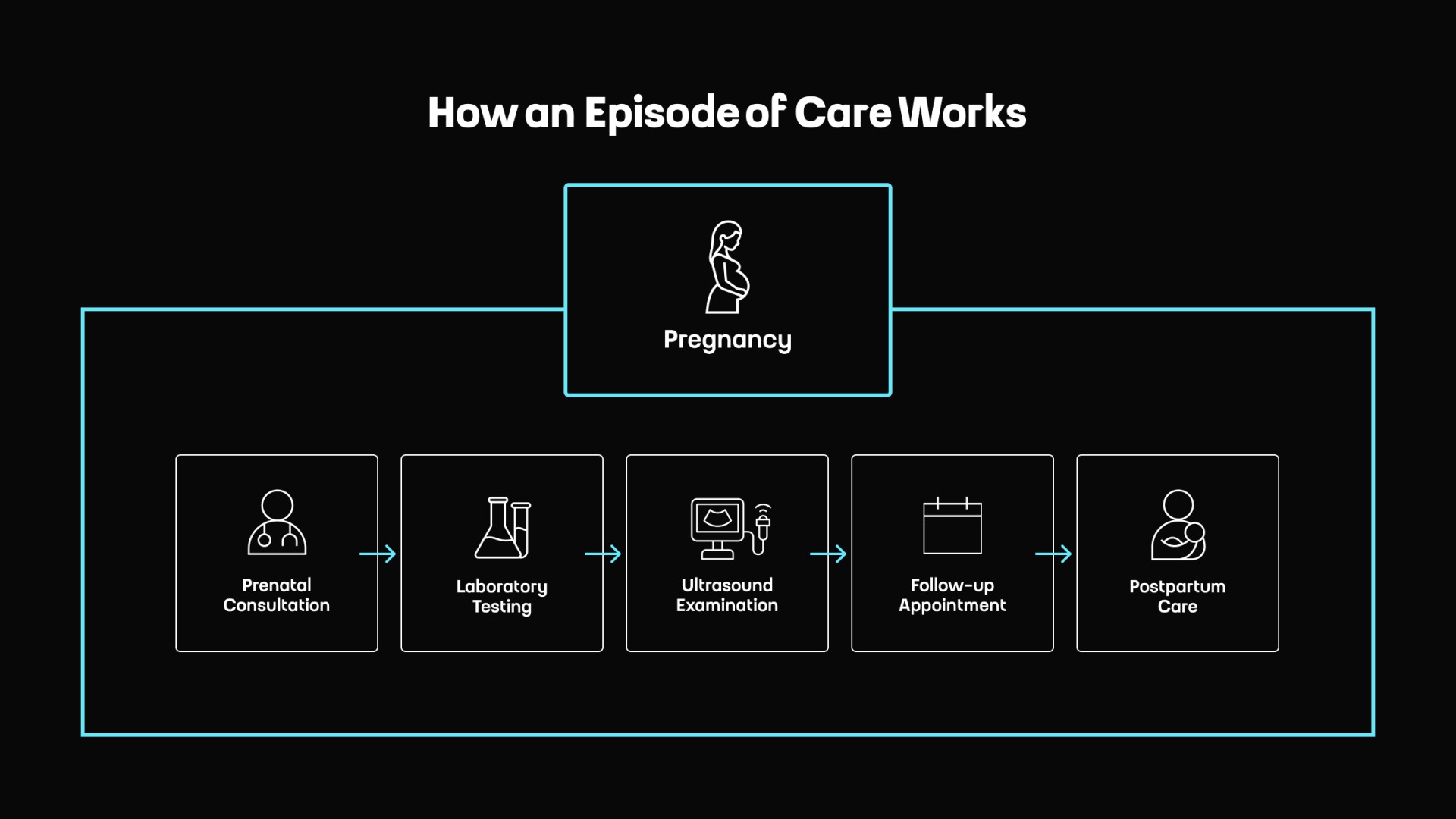
The patient may also receive treatment for an unrelated injury during pregnancy. Although that encounter belongs in the same medical record, it would not necessarily be associated with the pregnancy episode. This distinction helps healthcare organizations analyze care associated with a specific condition or treatment process.
Episodes of care typically have a defined beginning and end, although the boundaries depend on the clinical and operational context. An episode may cover a relatively short treatment period, such as recovery following a procedure, or extend over several months, as in pregnancy care. In some care management settings, episodes may remain open for longer periods when patients require ongoing support.
Organizing encounters into episodes becomes particularly important when healthcare organizations need to understand the cost, utilization, and quality of care associated with a particular condition.
The Difference Between an Encounter and an Episode of Care
An encounter represents an interaction between a patient and the healthcare system. This may include an in-person appointment, telehealth consultation, telephone call, home visit, or another documented interaction relevant to the patient's care.
Healthcare software uses the term encounter because many clinically relevant interactions do not involve a traditional office visit. A nurse calling a patient to discuss symptoms, a care coordinator reviewing treatment progress, or a healthcare professional conducting a home assessment may all generate documentation associated with an encounter, depending on the organization's workflow.
An episode of care connects encounters that belong to the same treatment process. For example, a patient receiving treatment for a knee injury may have an initial consultation, imaging examination, specialist appointment, physical therapy sessions, and follow-up assessments. Each interaction can be documented as an individual encounter, while the episode provides a way to examine them collectively.
This relationship is important for healthcare software architecture. The system needs to maintain individual encounter records while allowing relevant encounters to be associated with an episode. It must also accommodate encounters that do not belong to an episode, since not every interaction requires this type of grouping.
How Episodes of Care Begin and End
An episode may begin when a condition is identified, a treatment program starts, or a patient enters a defined period of care. The precise starting point depends on the clinical scenario and the organization's operational or reporting requirements.
For example, a pregnancy episode might begin when pregnancy care is established and end after delivery and the applicable postpartum period. A surgical episode may begin with a defined preoperative period and continue through the procedure and subsequent recovery. The dates used for financial or quality reporting may differ from the dates used for clinical coordination.
An episode can also have an assigned care manager, associated conditions, and a status indicating whether it is planned, active, completed, or otherwise closed. These details help healthcare teams understand which treatment processes are currently underway and who is responsible for coordinating them.
From a software development perspective, the episode should remain a distinct record with its own identity, status, and relevant dates. This allows the application to connect multiple encounters and other clinical information without duplicating the underlying patient records.
How Episodes of Care Organize the Patient Journey
A patient may interact with several healthcare professionals while receiving treatment for the same condition. Without episode grouping, those interactions are distributed throughout the patient's medical history alongside unrelated visits, tests, and procedures.
Episodes provide a way to organize this information around a particular course of care. Healthcare professionals can review the relevant interactions, understand how treatment progressed, and identify whether expected activities occurred.
Example: A Pregnancy Episode of Care
A patient receiving prenatal care may attend several physician appointments, undergo laboratory testing, receive ultrasound examinations, and communicate with the healthcare team between visits. These activities can take place across different departments and involve several professionals.
If the encounters are associated with the same pregnancy episode, the healthcare organization can examine the course of care as a whole. It may review the number of consultations, the timing of relevant tests, the services provided, and the outcomes documented during the episode.
The episode can also support operational questions. Did the patient receive the expected prenatal services? Were important follow-up appointments completed? How many encounters were required throughout the pregnancy? Which services contributed to the overall cost of care?
Answering these questions requires reliable relationships between the episode and the encounters or services associated with it. Simply knowing that a patient had several appointments during the same period is insufficient, because some of those appointments may have been unrelated to pregnancy.
Example: Managing Care Following Hospitalization
Episodes can also help healthcare organizations coordinate care after a patient leaves the hospital. A patient discharged following treatment for heart failure may require medication review, follow-up appointments, symptom monitoring and communication with different members of the care team.
These activities may occur across several settings, including the hospital, primary care practice, specialist clinic and the patient's home. Grouping relevant encounters into an episode can help the healthcare organization understand what happened after discharge.
For example, the care team may want to know whether the patient completed a follow-up appointment, whether medication concerns were addressed, and whether the patient required another hospital admission. The episode provides a useful structure for reviewing these events together, although evaluating outcomes such as readmissions may also require information from other systems.
This is particularly relevant when healthcare organizations are responsible for coordinating care beyond an individual hospital visit. Care quality may depend on what happens after discharge, when responsibility is distributed across different professionals and organizations.
How Care Plans and Episodes of Care Work Together
Care plans and episodes of care are closely connected, but they organize different aspects of healthcare delivery. A care plan establishes goals and activities intended to address a patient's needs, while an episode groups the encounters and services associated with a particular condition or treatment period.
For example, a patient participating in a heart failure management program may have a care plan containing goals related to symptom management, medication adherence, and reducing avoidable hospitalizations. The plan may include regular clinical reviews, patient education, remote monitoring, and follow-up calls.
At the same time, the healthcare organization may use an episode of care to group the encounters associated with a defined period of heart failure treatment. The episode helps organize what services were delivered, while the care plan explains the objectives those services were intended to support.
The two structures can therefore complement each other. A clinician reviewing the episode may want to understand the patient's treatment goals, while a care coordinator reviewing the care plan may need to examine encounters completed during the episode.
Connecting Conditions, Goals, Activities and Encounters
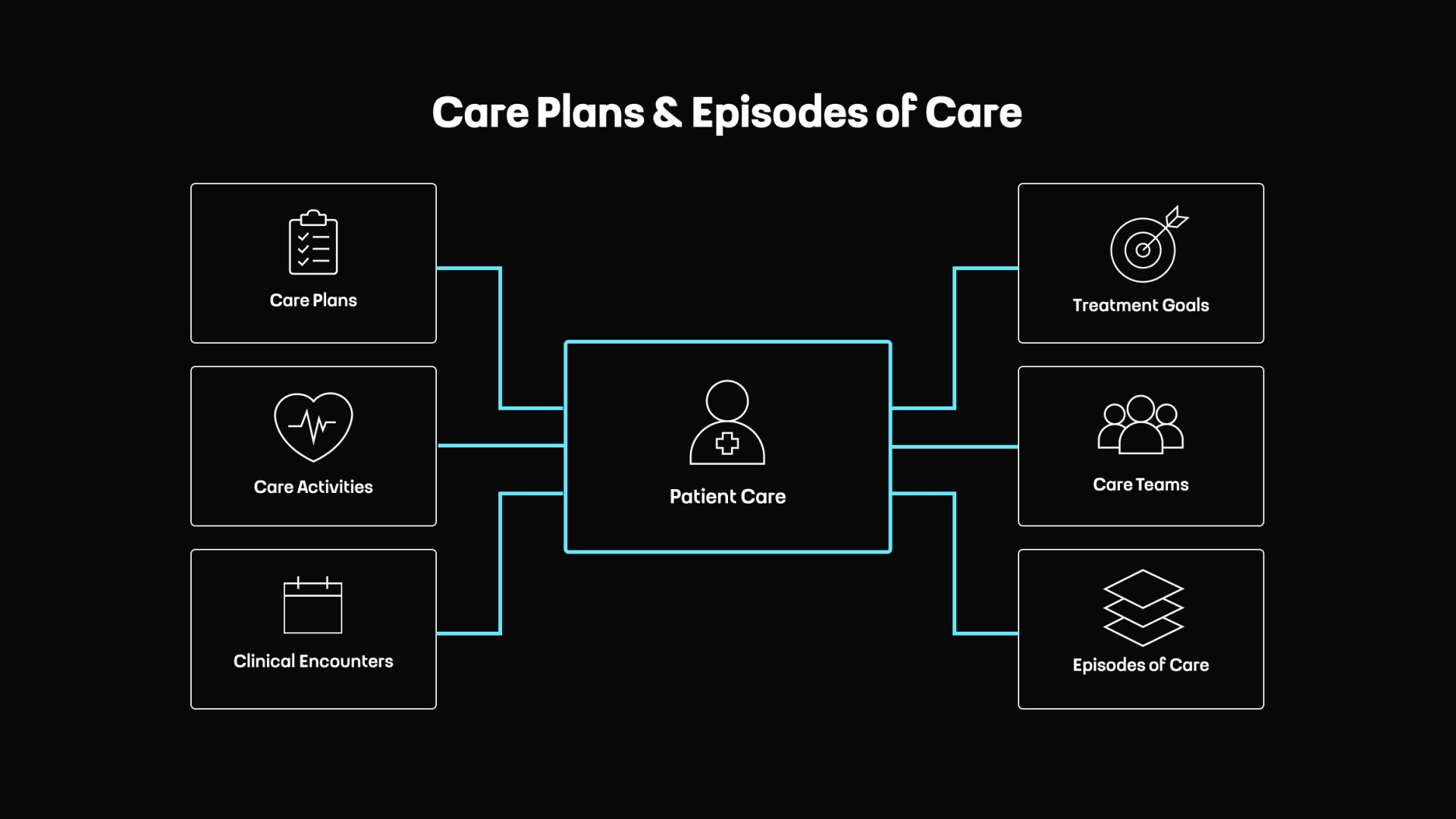
Healthcare software needs to maintain relationships between several types of clinical information. A patient condition may be associated with a care plan, the care plan may contain multiple goals and activities, and those activities may result in documented encounters or other clinical events.
An episode of care can connect relevant encounters to the same condition or treatment process. This allows the healthcare organization to review the patient's care from different perspectives, including the treatment objectives, work performed, and services delivered.
Consider a patient with diabetes who participates in a structured management program. The care plan may contain a goal related to HbA1c control and activities involving medication review, nutritional counseling, and laboratory monitoring. Encounters associated with the management program may be grouped into an episode, making it possible to examine the services delivered during a defined period.
These relationships should remain explicit within the software. An encounter does not automatically prove that a care plan activity was completed, and a completed activity does not necessarily mean that a clinical goal was achieved. The application needs to preserve the distinctions while making the information available for coordinated care and reporting.
Why Episodes of Care Matter for Value-Based Care
Episodes of care are particularly useful in healthcare payment models that evaluate services and outcomes across a defined period of treatment. In traditional fee-for-service arrangements, individual services are commonly billed separately. Value-based arrangements may place greater emphasis on total cost, quality, and outcomes for a patient population or course of care.
Episode-based payment models are one example. Instead of evaluating every service independently, a payer and healthcare provider may use a defined episode to examine the services associated with a particular treatment process.
For example, a payment arrangement for joint replacement surgery may consider services delivered during a defined period around the procedure. Depending on the contract, the episode may include hospital care, relevant professional services, and certain post-discharge services.
The healthcare organization needs reliable information about which services belong to the episode, how much they cost, and what outcomes were achieved. Without consistent grouping, evaluating performance against contractual expectations becomes difficult.
Measuring the Cost of Care
One of the most important uses of episode grouping is understanding healthcare costs. If a patient receives multiple services over several months, the healthcare organization needs to distinguish between costs associated with the condition being evaluated and unrelated medical expenses.
For example, determining the cost of pregnancy care requires identifying the services associated with pregnancy rather than simply adding every healthcare expense the patient incurred during the same period.
This becomes more complex when services are delivered by different organizations. A hospital may have detailed information about its own encounters but limited visibility into care delivered elsewhere. Depending on the reporting arrangement, claims data, payer information, and other external records may be needed to develop a more complete picture.
Episodes provide an organizing structure for this analysis, but accurate cost measurement also depends on the availability and quality of the underlying financial and clinical data.
Evaluating Quality and Outcomes
Episodes can also support quality measurement by defining the period and services relevant to a particular treatment process. Healthcare organizations may examine whether expected services were delivered, whether complications occurred, and whether patients required additional care.
For example, a program focused on post-hospitalization care may evaluate follow-up completion, emergency department utilization, and readmissions during a defined period. A maternity care program may examine relevant prenatal services and maternal or newborn outcomes.
The exact measures depend on the clinical setting and payment arrangement. Episode grouping makes the analysis more manageable by identifying which interactions belong to the treatment process, but it does not automatically establish whether care was effective.
Clinical outcomes are influenced by many factors, and quality measurement often requires risk adjustment, standardized definitions, and information from multiple sources. Healthcare software should therefore support consistent data collection while avoiding the assumption that completing more encounters necessarily produces better outcomes.
The Technical Architecture Behind Care Plans and Episodes of Care
Implementing care plans and episodes of care requires a healthcare application, such as an EHR system, to represent several related concepts without treating them as interchangeable. Patient conditions, goals, activities, encounters, and episodes each have different meanings and may be created or updated through different workflows.
A system that stores all this information as unstructured notes may be sufficient for basic documentation, but it becomes difficult to support automated task management, interoperability, and reliable reporting. Structured data makes it possible to connect clinical information across workflows and retrieve it for specific operational purposes.
Representing Care Plans and Episodes With FHIR
FHIR, or Fast Healthcare Interoperability Resources, provides standardized resources that can represent many of the concepts involved in care planning and episode management.
The CarePlan resource can represent a plan for addressing a patient's healthcare needs, including relevant conditions, goals and planned activities. The Goal resource can describe intended outcomes, while Task can support tracking work assigned to individuals or teams. Depending on the workflow, additional resources such as ServiceRequest, Observation and Condition may be used to represent clinical requests, measurements and diagnoses.
The EpisodeOfCare resource represents an association between a patient and an organization or care team over a period during which the organization assumes responsibility for a particular aspect of care. It can be associated with relevant conditions and connected to encounters through appropriate references.
The Encounter resource represents interactions between patients and healthcare services. When encounters are linked to an episode, applications can retrieve and organize relevant interactions without losing their individual documentation.
FHIR provides a common structure for exchanging this information, but implementing the resources does not automatically establish a complete care management workflow. Healthcare organizations still need to define how episodes are created, which encounters should be associated with them, how goals are evaluated, and which users can update different records.
Maintaining Relationships Between Clinical Records
A major technical challenge is preserving the relationships between records as patients move through different stages of care. A single patient may have multiple active care plans, several conditions, and encounters involving different healthcare professionals.
For example, a patient may receive treatment for diabetes while also undergoing rehabilitation following an injury. The application needs to distinguish between the relevant care plans, goals, and episodes while maintaining a consistent patient record.
Some encounters may be relevant to more than one aspect of the patient's care, while others may have no association with a defined episode. The software should accommodate these relationships according to the organization's clinical and reporting requirements rather than forcing every interaction into a single category.
Data consistency becomes especially important when information is exchanged between systems. If an external application receives an encounter without the context of its associated condition or episode, it may be difficult to interpret that encounter correctly. Preserving identifiers, references, and relevant clinical context helps reduce these problems.
Supporting Changes, Statuses and Historical Information
Care plans and episodes evolve over time. A goal may be revised, an activity may be discontinued, and an episode may transition from active to completed. These changes need to be reflected accurately in the application's data and user interface.
Healthcare professionals should be able to understand the current state of a care plan or episode while retaining access to relevant historical information. For example, a clinician may need to know why a treatment goal changed or when an episode was closed.
Auditability is also important. Changes to clinical information may need to be associated with the user responsible, the time of the change, and the relevant workflow. The level of detail required depends on the system and applicable regulations, but the underlying principle is that healthcare information must remain trustworthy as it changes.
Common Challenges When Developing Care Management Software
Care management applications must support clinical decisions and operational activities that extend across different roles, departments, and organizations. Several recurring challenges can make these systems more complex than conventional task management or workflow software.
Different Healthcare Organizations Define Workflows Differently
A care plan used in primary care may look very different from one used in behavioral health, rehabilitation, or a specialized chronic disease management program. Organizations may also have different approaches to assigning care managers, reviewing goals, and closing episodes.
The software needs enough flexibility to accommodate these differences without losing consistency in the underlying data. A rigid workflow may create unnecessary work for clinicians, while an overly flexible system can make standardized reporting difficult.
Developers therefore need to understand which elements should remain consistent across the platform and which should be configurable for particular clinical programs.
Care Coordination Extends Beyond Clinical Appointments
Many important care management activities take place outside traditional appointments. Patients may receive telephone follow-ups, remote monitoring, education, referrals, or assistance from community organizations.
These activities need to be documented and connected to relevant care plans, even when they do not involve a conventional clinical visit. Some may generate encounters, while others are better represented as tasks, service requests, or other records depending on the workflow.
The application must support these different activities without creating unnecessary documentation burdens for care teams.
Reporting Requires Consistent Data
Healthcare organizations may want to understand how many patients have active care plans, which goals are progressing, how many activities remain incomplete, and how different episodes compare in terms of utilization or outcomes.
These questions are difficult to answer when important information is stored inconsistently or spread across disconnected systems. A goal documented in a free text note, for example, may be difficult to compare with goals recorded as structured data.
Consistent definitions, clear relationships between records, and reliable status management help make reporting more useful. They also provide a foundation for more advanced analytics, although interpreting clinical outcomes still requires appropriate context.
Integration With Existing Healthcare Systems
Care management software rarely operates independently of the wider healthcare environment. It may need information from EHRs, laboratory systems, remote monitoring platforms, scheduling applications, and payer data sources.
For example, a care plan goal related to blood glucose control may depend on laboratory results generated outside the care management application. A coordinator monitoring follow-up completion may need appointment information from a separate scheduling system.
Integrating these systems requires attention to patient identity, data standards, access permissions, and the timing of information updates. Developers also need to account for situations where data is incomplete, delayed, or unavailable.
The goal is to provide care teams with information they can use without requiring them to manually reconstruct the patient's history across multiple applications.
Touch4IT's Experience With Healthcare Care Management Workflows
At Touch4IT, our experience developing healthcare software for the US market includes more than six years of engineering work with BigHeart, supporting healthcare programs serving large Medicaid populations.
This work has involved healthcare applications and infrastructure supporting clinical workflows, patient engagement, remote patient monitoring, care coordination, integrations, and data analytics. These are closely related to the challenges of developing care management systems, where information must remain connected across patients, healthcare professionals, and operational processes.
One recurring consideration in healthcare software development is that a feature that seems simple from a user's perspective may depend on several underlying systems. Displaying a patient's care activities, for example, can require information about clinical conditions, assigned responsibilities, patient interactions, and the status of related work.
As healthcare organizations expand their care management programs, these relationships become increasingly important. Applications need to support day-to-day activities while providing consistent information for reporting, interoperability, and future development.
Touch4IT works with digital health companies and healthcare organizations on custom software development, healthcare integrations, data infrastructure, and technical product delivery. Our focus is on helping clients build and scale software that fits the operational realities of the US healthcare market.
Final Thoughts
Care plans and episodes of care are important building blocks of modern healthcare software because they help organizations understand different aspects of the patient's treatment journey.
Care plans organize the goals and activities intended to improve a patient's health. Episodes of care connect relevant encounters and services over a defined period, making it easier to evaluate utilization, costs, and outcomes associated with a particular condition or treatment process.
Together, these concepts support care coordination, chronic disease management, clinical reporting and value-based care programs. They also create technical requirements that go beyond storing patient information, including structured data relationships, workflow management, interoperability, and reliable tracking of clinical and operational activities.
For digital health companies, understanding these concepts is essential when designing care management platforms, EHR functionality, and applications that coordinate care across multiple professionals and organizations. The software needs to reflect how healthcare is actually delivered while giving organizations the information required to manage and evaluate that care.
Building a healthcare platform that involves care plans, care coordination, or complex clinical workflows?
Touch4IT helps digital health companies develop and integrate healthcare software for the US market, drawing on more than six years of experience working with complex healthcare workflows and data infrastructure.
Talk to Jan about your project.
FAQ
1. What is a care plan in healthcare?
A care plan is a structured document that defines a patient's health goals and the activities needed to achieve them. It typically includes relevant medical conditions, measurable treatment goals, assigned responsibilities, and planned interventions. Healthcare professionals use care plans to coordinate treatment, monitor progress, and ensure that different members of the care team work toward the same objectives.
2. What is an episode of care in healthcare?
An episode of care represents a defined period of healthcare responsibility or treatment associated with a particular condition or clinical need. It can help healthcare organizations group relevant encounters, such as consultations, laboratory tests, and follow-up appointments. For example, a pregnancy episode may include prenatal visits, ultrasound examinations, and postpartum care, allowing the organization to review the services delivered throughout that period.
3. What is the difference between a care plan and an episode of care?
A care plan defines treatment goals and the activities intended to achieve them, while an episode of care organizes relevant healthcare encounters and services over a particular period. For example, a diabetes care plan may include medication management, laboratory monitoring, and lifestyle interventions. An episode of care can group the encounters associated with a defined period of diabetes management, supporting analysis of utilization, costs, and outcomes.
4. How do care plans support chronic disease management?
Care plans help healthcare organizations coordinate ongoing treatment for chronic conditions such as diabetes, hypertension, and heart failure. They connect clinical goals with activities such as medication reviews, laboratory monitoring, patient education, and follow-up appointments. By tracking responsibilities, completed activities, and clinical measurements, healthcare teams can evaluate patient progress and adjust treatment when necessary.
5. How does FHIR support care plans and episodes of care?
FHIR provides standardized resources for representing and exchanging healthcare information. The CarePlan resource describes planned care, while Goal represents intended outcomes and Task supports activity tracking. The EpisodeOfCare resource represents a period of responsibility for a patient's care, and Encounter records individual healthcare interactions. These resources can help healthcare applications exchange structured information across EHRs, care management platforms, and other clinical systems.
6. Why are episodes of care important for value-based care?
Episodes of care help healthcare organizations evaluate services, costs, and outcomes associated with a particular condition or treatment period. In episode-based payment models, providers and payers may assess the total cost and quality of care delivered during a defined episode rather than evaluating individual services independently. Reliable episode grouping supports performance measurement, financial analysis, and care coordination across different healthcare settings.