Connecting Healthcare and Social Care Through Technology: From Social Needs Screening to Closed-Loop Referrals


Healthcare providers can diagnose a condition, prescribe appropriate treatment, and develop a detailed care plan. Yet, a patient may still struggle to improve their health because of circumstances outside the healthcare system. A person with diabetes may understand the importance of a healthy diet but be unable to afford nutritious food. An older patient may miss medical appointments because they lack reliable transportation, while someone recovering from hospitalization may struggle to follow treatment instructions because their housing situation is unstable.
These problems are difficult to address through traditional medical services alone. Across the United States, healthcare organizations are increasingly recognizing the importance of connecting clinical care with social services. Hospitals, insurers, community health workers, and nonprofit organizations are finding ways to coordinate support for patients whose health is affected by their living conditions.
Technology plays an important role in making this coordination possible. Healthcare platforms can help identify social needs, connect patients with community resources, manage referrals, and track whether assistance was actually delivered. However, connecting healthcare and social care introduces challenges that extend beyond conventional EHR functionality, since healthcare organizations and community-based organizations often operate independently, use different software, and follow different processes.
Understanding how these organizations work together is essential for digital health companies developing care management, patient engagement, and population health solutions for the US market.
Why Healthcare and Social Care Need to Be Connected
Traditional healthcare delivery focuses primarily on diagnosing and treating medical conditions. Patients visit clinicians, receive prescriptions, undergo tests, and return for follow-up appointments, but medical treatment is only one factor influencing health outcomes. A patient's financial situation, housing, access to food, transportation, and social environment can significantly affect their ability to manage a condition or follow medical advice.
Consider a patient with hypertension who repeatedly misses appointments. A healthcare provider may initially interpret the missed visits as a patient engagement problem and respond with additional reminders or messages encouraging attendance. However, if the actual problem is a lack of transportation, reminders alone will not resolve it. The healthcare organization needs to understand why the patient is missing appointments and whether assistance is available.
This is where healthcare and social care begin to overlap. Healthcare professionals identify medical needs, while community organizations may provide services that address the circumstances preventing patients from receiving effective care. These services can include food assistance, housing support, transportation, financial assistance, and other forms of community support.
The challenge is coordinating activities between organizations that have historically operated separately. A physician may recognize that a patient needs food assistance but has limited information about available community resources. A nonprofit organization may provide that assistance without having an established way to communicate the outcome back to the healthcare provider. Without coordination, healthcare teams may continue treating the medical consequences of problems that remain unresolved outside the clinical setting.
Understanding Social Determinants of Health in Practice
The term social determinants of health (SDOH) describes the nonmedical conditions that influence people's health and well-being. These include the environments in which people live, work, and age, as well as their access to resources and opportunities. For healthcare organizations, social determinants become particularly relevant when they create practical barriers to receiving care or maintaining health.
Food insecurity is one example. A patient managing diabetes may be advised to follow a specific diet, but that recommendation becomes difficult to implement when the patient cannot consistently afford appropriate food. Housing instability presents another challenge, as a patient without stable housing may struggle to store medication, maintain regular routines, or attend follow-up appointments.
Transportation barriers can prevent patients from accessing appointments, pharmacies, or diagnostic services, while financial difficulties may affect their ability to pay for medication, medical supplies, or other treatment-related expenses. These circumstances can influence clinical outcomes even when the medical treatment itself is appropriate.
Social Determinants Versus Individual Social Needs
An important distinction exists between broader social determinants of health and the specific social needs identified for an individual patient. Social determinants describe the wider conditions that influence health across communities and populations, while individual social needs are the practical difficulties a particular patient experiences.
For example, limited public transportation is a community-level condition. A patient being unable to reach a medical appointment because they lack transportation is an individual need that a healthcare organization may be able to address.
This distinction matters when designing healthcare software. Population health analytics may help identify communities with higher levels of social risk. At the same time, a care management application needs to capture individual patients' specific needs and support activities to address them. The information must be useful for understanding the patient's circumstances and coordinating an appropriate response.
Understanding these needs is also relevant to value-based care technology, where healthcare organizations use clinical and nonclinical information to coordinate services and evaluate patient outcomes.
The Role of Community Health Workers in Connecting Healthcare and Social Care
One of the most important roles in connecting healthcare and social services is the community health worker, commonly referred to as a CHW. Community health workers help patients navigate healthcare and community resources, particularly when social or practical barriers make it difficult to access services. Depending on the organization, care coordinators, case managers, patient navigators, or engagement specialists may perform similar responsibilities.
Their work often begins with understanding the patient's situation. A community health worker may speak with a patient about food access, housing, transportation, financial difficulties, or other challenges affecting their health. If a need is identified, the worker helps the patient find an appropriate resource.
For example, a patient may require food assistance but not know which programs operate in their area or how to apply. The community health worker may search for available organizations, contact a suitable provider, explain the eligibility requirements, and help arrange the service. The work does not necessarily end once the referral has been made, since the worker may also follow up with the patient to determine whether assistance was received and whether further support is required.
This is a significant part of the value community health workers provide. They help translate an identified need into practical action, often coordinating activities that involve several organizations and multiple interactions with the patient.
Why Community Health Workers Need Dedicated Software Workflows
Community health workers interact with patient information differently from physicians or nurses. They may need access to relevant patient demographics, social history, care plans, and previous outreach activities. Still, they do not necessarily require the same permissions or clinical functionality as a medical provider.
A community health worker may need to document conversations, create tasks, record social needs, initiate referrals, and update the status of assistance being arranged. The software should connect these activities to the patient's broader care record so relevant information remains accessible to other authorized care team members.
For example, if a patient reports transportation difficulties, the worker should be able to record the need, document the proposed intervention, and track subsequent communication. Other members of the care team may then need visibility into the information to understand how the barrier is being addressed.
This creates requirements for role-based permissions, structured documentation, care coordination tasks, and referral management. The objective is to support the work community health workers actually perform without requiring them to navigate clinical functionality that is irrelevant to their responsibilities.
Supporting these responsibilities is one example of why EHR software development requires a detailed understanding of the different roles and workflows within healthcare organizations.
How Social Needs Screening Works in Healthcare
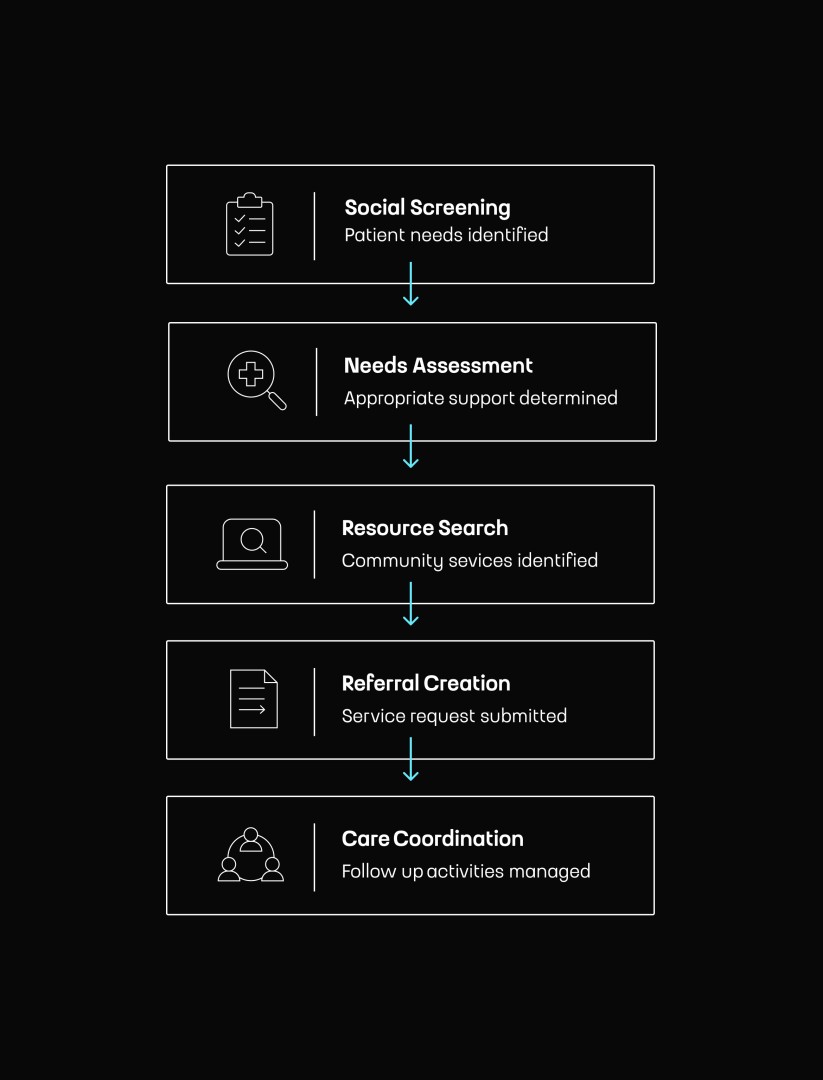
Before a healthcare organization can address a patient's social needs, it must identify them. This process, commonly known as social needs screening, involves asking patients structured questions about circumstances that may affect their health or ability to access care.
Questions may address food security, housing stability, transportation, financial strain, and other relevant needs. Screening can take place during a clinical encounter, through a patient questionnaire, or as part of a care management interaction. For example, a patient may be asked whether they have experienced difficulty obtaining enough food or whether transportation problems have prevented them from attending medical appointments.
The responses provide information that healthcare teams can use to determine whether additional support may be appropriate. However, collecting answers is only one part of the process. Healthcare organizations also need a way to interpret the information, determine appropriate next steps, and coordinate any resulting interventions.
Capturing Social Needs as Structured Healthcare Data
For software developers, screening introduces an important data management challenge. The application needs to record more than the fact that a questionnaire was completed. It may need to capture the screening date, the questions asked, the patient's responses, and any needs identified, while also supporting the follow-up activities that result from those findings.
If a patient reports food insecurity, for example, the information may need to become part of a care management workflow. A community health worker may be assigned to contact the patient, identify available services, or initiate a referral. The application must preserve the connection between the original screening response and the actions taken afterward.
Structured information can also support reporting across patient populations. A healthcare organization may want to understand how many patients reported transportation barriers, how many were referred for assistance, and how many received services. Producing reliable answers requires consistent data capture and a way to connect screening results with subsequent activities.
At the same time, screening information can be sensitive. Healthcare applications need to consider appropriate access permissions, privacy requirements, and the patient's circumstances when collecting and sharing social needs information.
Screening Does Not Automatically Mean a Patient Needs a Referral
Identifying a social need is only the beginning of the process, and not every positive screening response will result in the same intervention. A patient may already be receiving assistance, may not want a referral, or may have circumstances that make the available services unsuitable.
A care worker may therefore need to discuss the situation further before deciding what action is appropriate. The application should support this assessment rather than automatically treating every identified need as a request for external assistance.
For this reason, healthcare software should distinguish between a reported need, an assessed need, an intervention, and a completed service. Treating these as separate events helps organizations understand what happened and prevents screening results from being mistaken for evidence that assistance was delivered.
From Identifying a Social Need to Creating a Referral
Once a social need has been identified and the patient agrees to receive assistance, the next challenge is finding an appropriate organization. Community resources differ significantly between locations, and a food assistance program available in one ZIP code may not serve patients in another area. Some organizations have eligibility requirements, limited capacity, or restrictions on the populations they support.
Services can also change over time. A nonprofit organization may modify its operating hours, stop accepting referrals, or change the type of assistance it provides. This makes community resource navigation an ongoing operational task rather than a simple database lookup.
Finding the Right Community Resource
Community health workers often rely on directories or referral platforms to identify available services. These tools may allow users to search for organizations by location, service category, or patient need. For example, a care worker looking for food assistance may search for organizations operating within the patient's ZIP code and find food banks, meal delivery services, or other local programs.
However, identifying an organization does not guarantee that the patient is eligible or that the service is currently available. The worker may need to contact the organization, confirm its requirements, and determine whether it can accept the patient.
For healthcare software companies, this creates requirements around resource directories, service categories, geographic coverage, eligibility information, and maintaining accurate organization records. A directory containing outdated information can create additional work for care teams and frustration for patients, particularly when the patient has already experienced difficulty obtaining support.
Creating and Managing the Referral
Once an appropriate organization has been identified, the care worker may create a referral containing information about the patient's need, the requested service, and the organization responsible for assisting. Depending on the systems involved, the referral may be transmitted electronically or coordinated through another communication channel.
The healthcare platform should maintain a record of the referral and its status, distinguishing between requests that have been created, accepted, and completed. It may also need to record unsuccessful referrals and the reasons assistance could not be provided.
These distinctions become important when multiple organizations participate in the same patient's care. A healthcare provider needs to understand which activities are pending, which require follow-up, and which are complete. Without this information, care coordination teams may struggle to determine whether an identified need has been addressed.
Why Traditional Social Care Referrals Often Fail
Many healthcare organizations already identify social needs and refer patients to community resources. The difficulty is maintaining visibility after the referral leaves the healthcare organization.
Consider a patient who is referred to a local food assistance program. The healthcare team may record that the referral was made, but the community organization may use a separate system or manage requests through telephone calls and email. The healthcare provider may not receive confirmation that the organization accepted the referral and, even if it was accepted, may not know whether the patient ultimately received assistance.
This creates a gap between referring a patient and resolving the identified need. The healthcare team has documented an action, but it may have no reliable information about the result.
A Referral Is Not the Same as a Completed Service
Healthcare organizations need to distinguish between several possible referral outcomes. A referral may have been sent successfully but never reviewed by the receiving organization. It may have been accepted, but the patient may not meet the eligibility requirements. The organization may have attempted to contact the patient without success, or the patient may have received the requested assistance without that outcome being communicated back to the healthcare provider.
If the software records only that a referral was created, these situations can appear identical. This limits the organization's ability to evaluate whether its care coordination activities are effective and can lead to repeated outreach, duplicated referrals, or unresolved needs remaining unnoticed.
The Challenge of Disconnected Organizations
Healthcare providers and community-based organizations often operate with different technology capabilities. A hospital may have a sophisticated EHR and care management infrastructure, while a small nonprofit may rely on spreadsheets, basic case management software, or manual processes. Even when both organizations use digital tools, those systems may not exchange information automatically.
Differences in terminology, patient identification, permissions, and available infrastructure can make integration difficult. The challenge becomes greater when a healthcare organization coordinates referrals across dozens of community partners, each with its own processes for accepting requests, documenting services, and communicating outcomes.
For healthcare technology companies, this creates a need for workflows that accommodate varying levels of digital maturity. Some organizations may support direct system integration, while others may require simpler ways to receive referrals and provide status updates. The goal is to maintain continuity of information without assuming that every participating organization operates like a hospital or large healthcare provider.
This is where closed-loop referral technology becomes particularly important. A connected system should help healthcare organizations understand what happened after a referral was created, whether the patient received assistance, and whether further intervention is necessary.
What Closed Loop Referrals Actually Mean in Healthcare
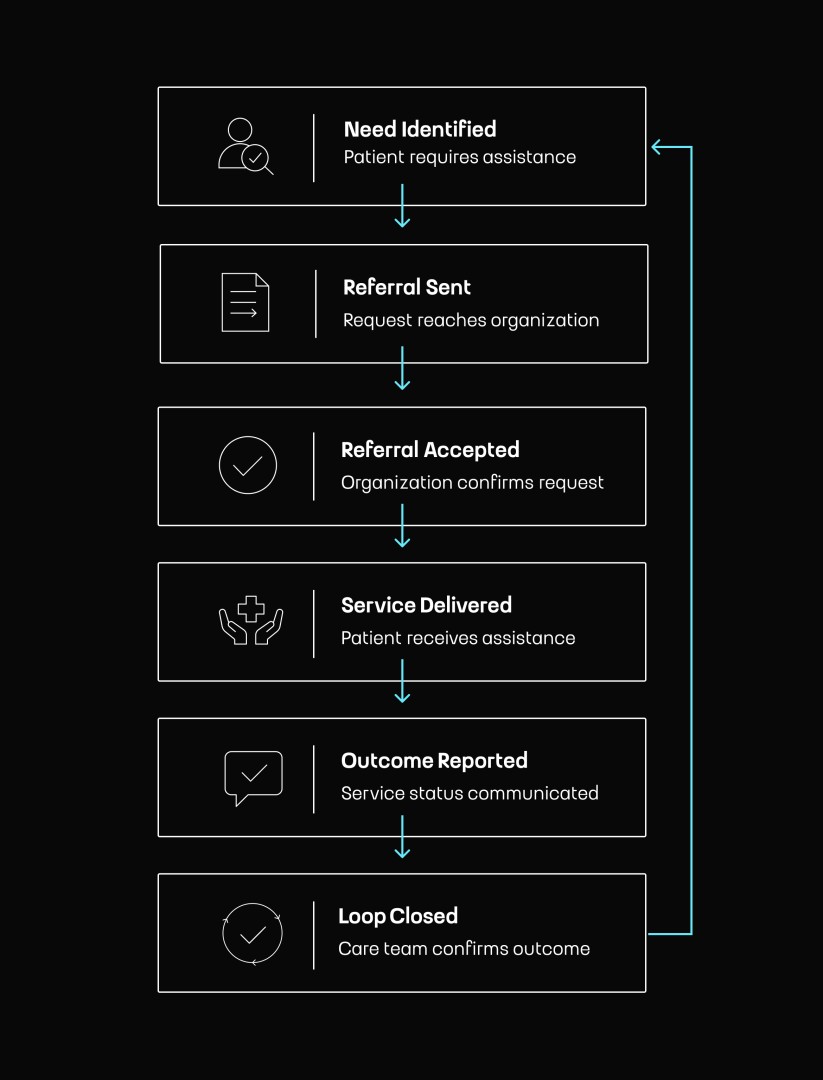
A healthcare provider may identify a patient's social need and refer them to a community organization, but the process remains incomplete until the care team understands what happened afterward. This is the principle behind closed-loop referrals, which allow healthcare organizations to track a referral beyond its initial creation and determine whether the receiving organization accepted the request, contacted the patient, delivered assistance, or identified a need for further follow-up.
Consider a patient with diabetes who reports difficulty accessing nutritious food. A community health worker identifies the need during a screening, discusses available assistance with the patient, and sends a referral to a local food assistance organization. The organization receives the request, determines whether the patient is eligible, and arranges the appropriate service. Once assistance has been provided, the outcome is communicated back to the healthcare team, allowing the care worker to confirm whether the patient's need has been addressed or whether another intervention is necessary.
Tracking Referral Status Across Organizations
A closed-loop referral system needs to represent the different stages of a referral, from its initial creation to the eventual outcome. These stages may include a referral being created, sent, accepted, in progress, completed, or unsuccessful. The exact statuses depend on the organization and the type of service involved. Still, the underlying requirement is consistent: healthcare teams need to distinguish between administrative progress and actual service delivery.
A referral being accepted does not necessarily mean the patient received assistance. The community organization may discover that the patient does not meet eligibility requirements, may be unable to reach them, or may lack the capacity to provide the requested service. Similarly, an unsuccessful referral does not always mean the coordination process has ended, since the patient may need to be connected with another organization. Healthcare software should therefore support follow-up activities, alternative referrals, and documentation of unresolved needs.
Why Closed Loop Referrals Matter for Healthcare Organizations
Without reliable referral outcomes, healthcare organizations can measure how many referrals they created but struggle to understand what those referrals achieved. A closed-loop process provides a more useful view of care coordination by showing which community organizations accepted requests, how long referrals remained unresolved, and how often services were successfully delivered.
This information can support operational improvements. If referrals to a particular organization frequently remain unanswered, the healthcare provider may need to review the partnership or identify alternative resources. If patients consistently struggle to obtain transportation assistance, care managers may need to investigate whether existing services meet the population's needs. These insights are particularly relevant to population health and value-based care initiatives, although a completed referral should not automatically be treated as evidence of improved clinical outcomes. Demonstrating a measurable health or financial impact requires additional evidence.
How Technology Connects Healthcare Providers and Community Organizations
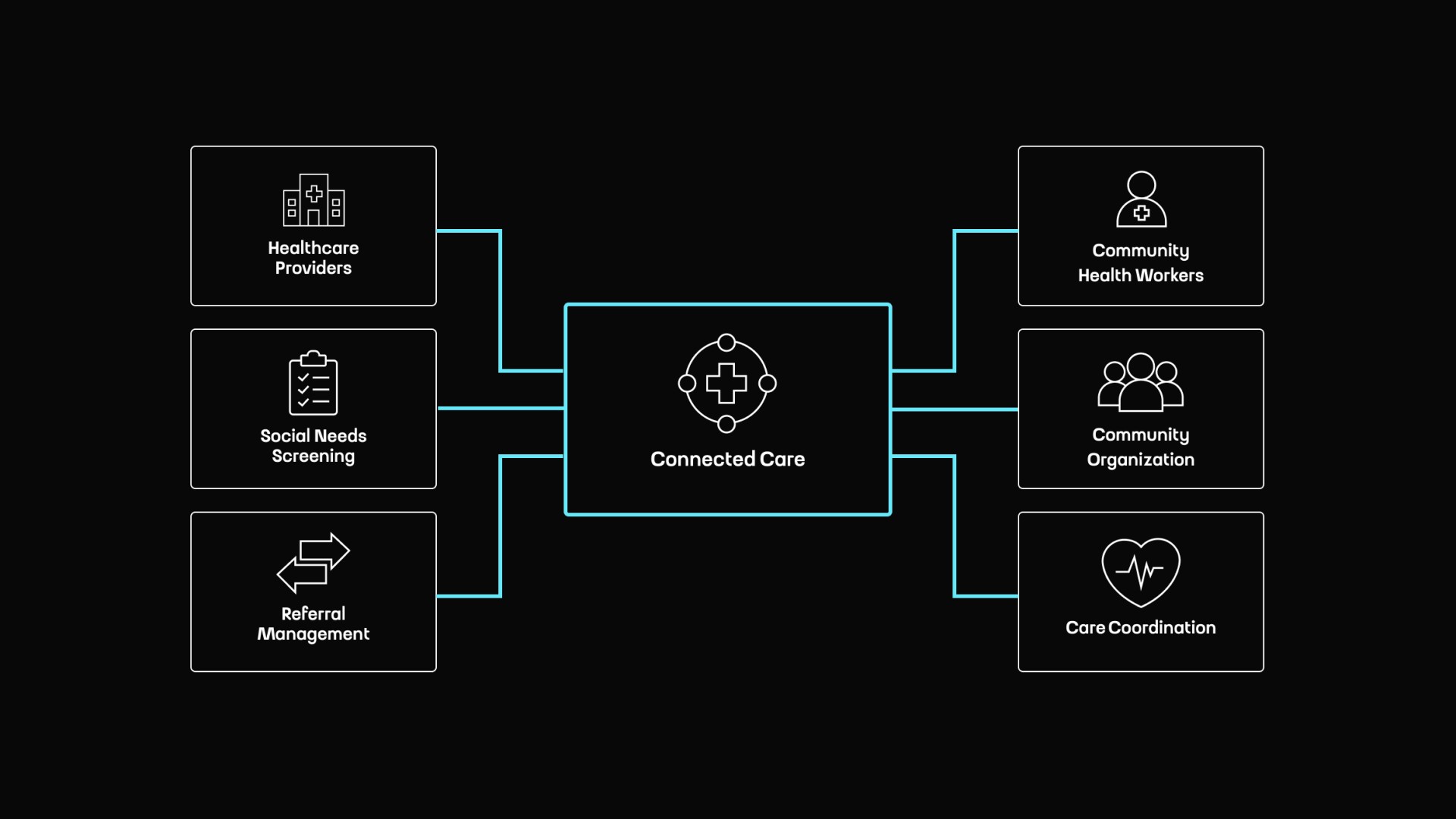
Connecting healthcare and social care requires software that supports cooperation between organizations with different responsibilities, systems, and technical capabilities. A hospital may use an EHR to manage clinical documentation, appointments, and treatment plans, while an insurer uses care management and population health platforms. A community-based organization may rely on specialized case management software or a relatively simple application for managing service requests.
These organizations need to exchange relevant information without necessarily adopting the same technology. The challenge is to maintain continuity throughout the patient's care journey while accommodating each participant's different workflows and technical resources.
Integrating Social Care Into Existing Healthcare Workflows
Social care coordination becomes more useful when it is connected to the healthcare activities already taking place. For example, a social needs screening completed during a patient encounter may identify a transportation problem. The result can trigger a task for a community health worker to review the patient's circumstances and initiate a referral. The referral status can then be made available to appropriate members of the care team, allowing them to understand whether the issue is being addressed.
Supporting this workflow requires several connected software capabilities. The screening module must capture the patient's responses, care management functionality must support task assignment and follow-up, and the referral system must record the receiving organization and requested service. The platform must also preserve the relationship between these activities and the correct patient so that clinicians and care coordinators can access relevant information alongside the broader care plan.
However, different users need different levels of access. A physician may only need to know that a transportation barrier is being addressed. At the same time, a community health worker may require detailed information about the referral and communication with the service provider. The application should accommodate these responsibilities through appropriate permissions and workflows.
Supporting Community Organizations with Different Technical Capabilities
One of the biggest practical challenges is the diversity of organizations providing social services. A large healthcare organization may expect electronic referrals, automated notifications, and structured status updates, while a small nonprofit may lack the resources to implement complex healthcare integrations. Requiring every community partner to support the same technical standards could make participation unnecessarily difficult.
Healthcare platforms therefore need flexible approaches to collaboration. Some organizations may connect through APIs, while others may use a secure web portal to review incoming referrals and update their status. Where electronic integration is unavailable, authorized care workers may document referral outcomes based on information received through other channels. Regardless of the method, the system should maintain an accurate record of what is known, who provided the information, and when it was recorded.
This flexibility allows healthcare organizations to coordinate with a wider range of community partners while gradually improving automation. It also recognizes that a small food assistance nonprofit and a large hospital system have fundamentally different technology requirements and resources.
Resource Directories and Referral Platforms
Community resource directories help care workers identify organizations offering food assistance, transportation, housing support, financial assistance, and other services. Platforms such as Unite Us and Findhelp operate in this area, providing tools to navigate community resources and coordinate referrals.
For software developers, resource discovery involves more than presenting a searchable list. An application may need to account for geographic coverage, service categories, eligibility requirements, current availability, and the accuracy of organization records. It also needs to support situations in which an organization cannot provide the requested service, allowing care workers to identify alternatives without losing the history of the original referral.
A platform that helps a care worker find an organization but cannot support subsequent coordination solves only part of the problem. The broader objective is to connect resource discovery, referral management, and outcome tracking into a workflow that healthcare teams and community organizations can use effectively.
SDOH Data Standards and Healthcare Interoperability
As healthcare organizations collect more information about social needs, representing and exchanging that information consistently becomes increasingly important. A social need may appear in a screening questionnaire, a clinical note, a care plan, or a referral. If different systems represent the same information in incompatible ways, coordinating activities and producing reliable reports becomes difficult.
Healthcare interoperability standards and terminology systems can help establish a more consistent approach to recording social needs, exchanging information, and tracking interventions across organizations.
These challenges are part of the broader problem of healthcare interoperability, which requires systems to exchange information while preserving its meaning and clinical context.
Using Standardized Codes for Social Needs
In the United States, certain social circumstances can be represented using ICD-10-CM Z codes, which allow healthcare organizations to document factors that may influence a patient's health, including housing instability, food insecurity, and transportation difficulties. However, recording a Z code does not automatically establish that an intervention occurred. A record indicating food insecurity identifies a relevant circumstance, but it does not confirm that the patient was referred to a food assistance organization or received food.
Healthcare software therefore needs to distinguish between the identified need, the planned intervention, and the actual outcome. Other terminology systems can also support this process. LOINC can identify standardized screening questions and assessment instruments, while SNOMED CT can represent certain clinical and social concepts. The appropriate terminology depends on the information being recorded and the requirements of the systems exchanging it.
FHIR and the Gravity Project
FHIR provides a framework for exchanging structured healthcare information through standardized resources and APIs. In social care workflows, relevant information may be represented through resources such as QuestionnaireResponse, Observation, Condition, ServiceRequest, Task, and CarePlan, depending on the use case and applicable implementation guidance. For example, a screening questionnaire may capture a patient's responses, while a service request may represent a referral for assistance. Additional resources and workflow information may be needed to document what happened after the referral.
The Gravity Project is an important US initiative focused on improving the standardization and interoperability of social determinants of health information. Its work addresses areas such as screening, assessment, diagnosis, goal setting, and interventions, providing useful guidance for digital health companies designing systems that exchange social care information with other healthcare applications.
However, supporting FHIR does not automatically guarantee interoperability with every community organization. Actual integration still depends on the receiving system's capabilities, the implementation guides being used, data mapping, authentication, authorization, and the workflows of participating organizations.
Protecting Sensitive Social Information
Social care coordination introduces important privacy considerations because information about a patient's housing situation, financial difficulties, or other personal circumstances may be sensitive. Healthcare organizations must determine which information is necessary for a referral and who is authorized to access it. A community organization providing food assistance may need contact information and details about the requested service, but it does not necessarily need access to the patient's complete medical record.
Similarly, a community health worker may need to document outreach and referral activities without receiving unrestricted access to unrelated clinical information. Applications should support appropriate permissions, secure communication, audit trails, and data-sharing practices that reflect applicable legal requirements. HIPAA may apply depending on the entities, relationships, and information involved, but community organizations do not all have the same regulatory status as healthcare providers or insurers. This makes data-sharing arrangements and clearly defined responsibilities particularly important.
Medicaid Programs and the Challenge of Sustainable Social Care Funding
Technology can improve the coordination of healthcare and social services, but the underlying activities also need sustainable funding. This has long been a major challenge for community health programs in the United States, where medical services generally operate within established payment structures. At the same time, social care activities often depend on different funding arrangements.
A community health worker may spend considerable time identifying resources, contacting organizations, helping patients complete applications, and following up to confirm they received assistance. These activities can be valuable to the patient, but they are not automatically reimbursable under traditional medical billing arrangements. Funding may instead depend on grants, government initiatives, contracts with health plans, or other program-specific arrangements.
Why Grant-Funded Programs Can Be Difficult to Sustain
Grant funding can help organizations launch community health initiatives, employ community health workers, and test new approaches to care coordination. However, a program may struggle to continue when its funding period ends, particularly when patients depend on ongoing relationships with community health workers.
An organization may successfully establish outreach and referral processes during a funded initiative but lack the financial resources to maintain those services afterward. This creates a need for more sustainable operating models in which healthcare organizations, insurers, and government agencies consider how social care coordination will be financed beyond the initial pilot.
For technology providers, this means operational reporting and financial visibility can be important alongside referral functionality. Organizations may need to demonstrate how resources are being used, which services are delivered, and whether programs are reaching their intended populations.
Medicaid and Section 1115 Demonstration Programs
Medicaid plays an important role in connecting healthcare and social services, particularly for populations facing significant social and economic challenges. Under Section 1115 of the Social Security Act, states can receive federal approval to test certain approaches to Medicaid coverage and delivery. Some approved demonstrations include initiatives addressing health-related social needs, such as nutrition or housing-related support, subject to specific program requirements and limitations.
In March 2025, CMS rescinded its earlier guidance on covering health-related social needs. Existing approvals remain in place, but new requests are now evaluated case by case, which makes this area of Medicaid policy less predictable for states and technology vendors.
These arrangements differ between states and do not provide a general guarantee that social care services will be reimbursed. A program operating in Illinois may have different requirements, eligible services, and reporting obligations from a program in another state. For digital health companies developing solutions intended for multiple Medicaid markets, this creates additional complexity because software may need to support different service definitions, eligibility criteria, documentation requirements, and reporting structures.
It is therefore important to distinguish between the technical ability to coordinate a social service and the financial rules governing whether that service is covered or funded. A platform may support referrals across many organizations, but the underlying payment arrangements remain dependent on the applicable program.
Understanding these funding arrangements also requires familiarity with US healthcare reimbursement, where payment rules differ across public programs, commercial insurance, and specific service categories.
Why Reporting Matters for Social Care Programs
Organizations participating in Medicaid initiatives or other funded social care programs may need to report on screening activities, referrals, service delivery, and patient participation. For example, a program may need to know how many patients were screened, how many needs were identified, how many referrals were created, and how many services were completed. It may also need to analyze results by geography, service category, participating organization, or patient population.
Producing these reports requires consistent information across the coordination process. If screening results are stored in one system, referrals in another, and service outcomes in spreadsheets, preparing reliable reports becomes difficult. Connected data infrastructure can reduce manual reconciliation and improve visibility into program operations, but reporting requirements vary by payer, state, and funding arrangement. Healthcare software should therefore be designed around actual contractual and regulatory requirements rather than assuming that one reporting format applies everywhere.
Although social care program reporting differs from traditional healthcare claims processing, both depend on accurate documentation, consistent data, and reliable information exchange.
Building Healthcare and Social Care Integration Into Healthcare Software
For digital health companies, social care integration combines clinical, operational, and technical requirements. The challenge is to create software that supports end-to-end coordination while remaining usable for healthcare professionals and community organizations with different responsibilities and resources.
A Consistent Patient and Social Needs Record
The system should maintain a clear relationship between the patient, identified social needs, screening responses, care plans, and referrals. A patient may have several needs at the same time, each involving different interventions or organizations, so the application must preserve this context and let care workers understand what has already been identified, which activities are underway, and what remains unresolved.
Referral and Task Management
Referral management needs to support the activities surrounding a request, including assigning responsibilities, setting follow-up tasks, documenting communication, and handling referrals that are rejected or remain unresolved. The system should also accommodate multiple referrals for the same patient when different services are required. Clear ownership is essential because a single referral may involve several organizations and individual workers.
Integration With Healthcare and Community Systems
Healthcare platforms may need to exchange information with EHRs, care management applications, resource directories, and community organization systems. Some integrations may use FHIR APIs or other structured interfaces, while others require secure portals, file exchanges, or controlled manual updates. A flexible integration architecture helps accommodate these different capabilities without forcing every organization into the same technical model.
Role-Based Access and Auditability
Healthcare professionals, community health workers, administrators, and nonprofit staff have different responsibilities and information needs. Software should provide access to the information each role needs while protecting unrelated patient data. It should also maintain records of important activities, including referral creation, status changes, information sharing, and service completion, particularly when multiple organizations participate in the same workflow.
Reporting and Population Health Analytics
Operational dashboards can help organizations understand how their social care programs are functioning by measuring screening completion, identified needs, referral acceptance, time to resolution, and confirmed service delivery. Analytics can also reveal differences between locations, participating organizations, or patient groups, supporting improvements in coordination and reporting obligations associated with funded programs. These capabilities require clear definitions so that measures such as referral completion are interpreted consistently.
Touch4IT's Experience Connecting Healthcare Workflows
Developing technology for healthcare and social care coordination requires an understanding of both software architecture and the operational realities of US healthcare. A referral may seem like a relatively simple feature, but supporting the full process involves patient information, screening workflows, task management, permissions, external organizations, and reporting.
Touch4IT has more than six years of experience developing healthcare technology for the US market through its long-term engineering partnership with BigHeart, a healthcare platform supporting large Medicaid populations. Our healthcare engineering work spans EHR functionality, telehealth, remote patient monitoring, care management, patient engagement, and healthcare data infrastructure. We describe some lessons from this work in our article on large-scale patient engagement in Illinois Medicaid.
This experience provides a practical foundation for understanding how clinical and nonclinical workflows need to work together, particularly in environments where healthcare organizations coordinate services across different teams and systems. For digital health companies developing care management or population health solutions, the engineering challenge is often to connect existing workflows and data sources while maintaining reliable information, appropriate access controls, and clear operational responsibilities.
Final Thoughts
Connecting healthcare and social care is becoming an increasingly important part of coordinated healthcare delivery in the United States. Medical treatment can be affected by circumstances that healthcare providers cannot address through clinical services alone, including food insecurity, transportation barriers, housing instability, and financial difficulties. Addressing these needs often requires cooperation between healthcare organizations and community-based service providers.
Technology can support this cooperation through social needs screening, resource discovery, referrals, follow-up, and reporting. However, the effectiveness of these systems depends on whether they support real coordination between the organizations involved. A referral that disappears into another system provides limited visibility, while a completed screening without follow-up may leave the patient's needs unresolved.
Effective healthcare and social care integration requires software that connects information with practical action. For digital health companies, this means understanding the responsibilities of healthcare providers, community health workers, insurers, and social service organizations before designing the technology that supports them.
Building a healthcare platform that connects clinical care, patient engagement, and social services?
Touch4IT helps digital health companies develop and integrate healthcare software for the US market, drawing on more than six years of experience working with complex healthcare workflows and data infrastructure.
Talk to Jan, our healthcare lead at Touch4IT, for any software development project.
FAQs: Connecting Healthcare and Social Care Through Technology
Add these six FAQs directly to the end of the article, before the final Touch4IT CTA.
1. What is healthcare and social care integration?
Healthcare and social care integration is the coordination of medical services with community-based support that addresses patients' social needs. It connects healthcare providers, insurers, community health workers, and social service organizations to help patients access assistance with food, housing, transportation, and other factors affecting their health. Technology supports this process through social needs screening, care management, referrals, and outcome tracking.
2. What are social determinants of health (SDOH)?
Social determinants of health are the nonmedical conditions that influence a person's health, including housing, income, education, transportation, and access to nutritious food. Healthcare organizations use social needs screening to identify specific difficulties affecting individual patients and determine whether additional support or community services may be appropriate.
3. What is a closed-loop referral in healthcare?
A closed-loop referral is a process that tracks what happens after a patient is referred to another organization for assistance. It allows healthcare teams to determine whether the referral was accepted, whether the patient received the requested service, and whether further follow-up is necessary. Unlike a basic referral, it provides visibility into the outcome of the coordination process.
4. How do community health workers support care coordination?
Community health workers help patients navigate healthcare and social services by identifying practical barriers, finding suitable resources, arranging referrals, and following up on outcomes. They may also document outreach activities, update care plans, and coordinate with clinicians and community organizations. Healthcare software supports their work through dedicated workflows, task management, and appropriate access to patient information.
5. How does FHIR support healthcare and social care integration?
FHIR supports the exchange of structured healthcare information between applications. Depending on the implementation, resources such as QuestionnaireResponse, Observation, ServiceRequest, Task, and CarePlan can represent social needs screening, referrals, and care coordination activities. Initiatives such as the Gravity Project provide additional guidance for standardizing social determinants of health information in US healthcare.
6. Does Medicaid reimburse social care services?
Some Medicaid programs support certain health-related social needs services through approved initiatives, including Section 1115 demonstrations. However, coverage, eligibility, and payment arrangements vary by state and program. Federal policy in this area has also shifted since 2025, when CMS rescinded its earlier guidance on health-related social needs, so existing programs continue under their current approvals while new requests are reviewed case by case. Community health worker activities and social services are not automatically reimbursable, so healthcare organizations must follow the specific funding and reporting requirements that apply to their programs.