What Large-Scale Patient Engagement Really Looks Like: Lessons from Illinois Medicaid


Listen to the article
Prefer listening over reading? Press play to hear the full article.
Healthcare often celebrates innovation through new apps, AI algorithms, and connected devices.
But at population scale, innovation looks very different.
It's less about introducing another digital tool and more about answering operational questions that affect thousands of patients every day. Who is overdue for preventive care? Which patients have stopped responding to outreach?
Who recently left the hospital and requires follow-up? Which care gaps should be addressed first? How do you coordinate all of this across hundreds of thousands of people without overwhelming care teams?
These challenges define modern population health.
They're also the challenges that many healthcare organizations underestimate when they begin building patient engagement solutions.
In a recent conversation with Charles Oyibo, Principal at BigHeart, we discussed what patient engagement looks like at Medicaid scale rather than in a pilot program.
For more than six years, Touch4IT has worked alongside the BigHeart team, helping to develop and evolve a digital health platform that supports hundreds of thousands of Medicaid beneficiaries in the United States. Learn more about the project in our BigHeart Case Study.
Rather than discussing theory, our conversation focused on the practical realities of engaging large patient populations, coordinating care, and improving preventive health outcomes.
🎙️ Listen to the full conversation with Charles Oyibo here.
What emerged wasn't a discussion about features. It was a lesson in how healthcare technology becomes an operational infrastructure.
Why Medicaid Presents a Unique Challenge
Medicaid is one of the largest public healthcare programs in the United States, providing healthcare coverage for millions of Americans, including low-income families, children, seniors, and people living with disabilities.
Serving these populations isn't simply about providing insurance coverage. Many beneficiaries face barriers that make consistent healthcare participation difficult. Some patients frequently change addresses or phone numbers.
Others lack reliable internet access. Transportation can become a barrier to attending appointments. Language differences may complicate communication.
Chronic conditions often coexist with social challenges, making long-term care management significantly more complex. As a result, traditional patient engagement strategies often fall short.
Sending another appointment reminder doesn't solve the underlying problem.
Healthcare organizations need systems that can identify patients who need support, understand why they're disengaged, and coordinate interventions across clinical teams, community organizations, and care managers.
Patient engagement becomes less about communication and more about orchestration.
If you're new to the concept, our guide, What Is a Patient Engagement Platform?, explores the fundamentals and explains the core capabilities, architecture, and engineering principles behind modern patient engagement solutions.
Beyond Patient Portals: Building an Operational Platform
One of the strongest themes from our discussion with Charles was that successful engagement platforms are rarely centered around the patient portal itself.
Instead, the platform operates continuously in the background.
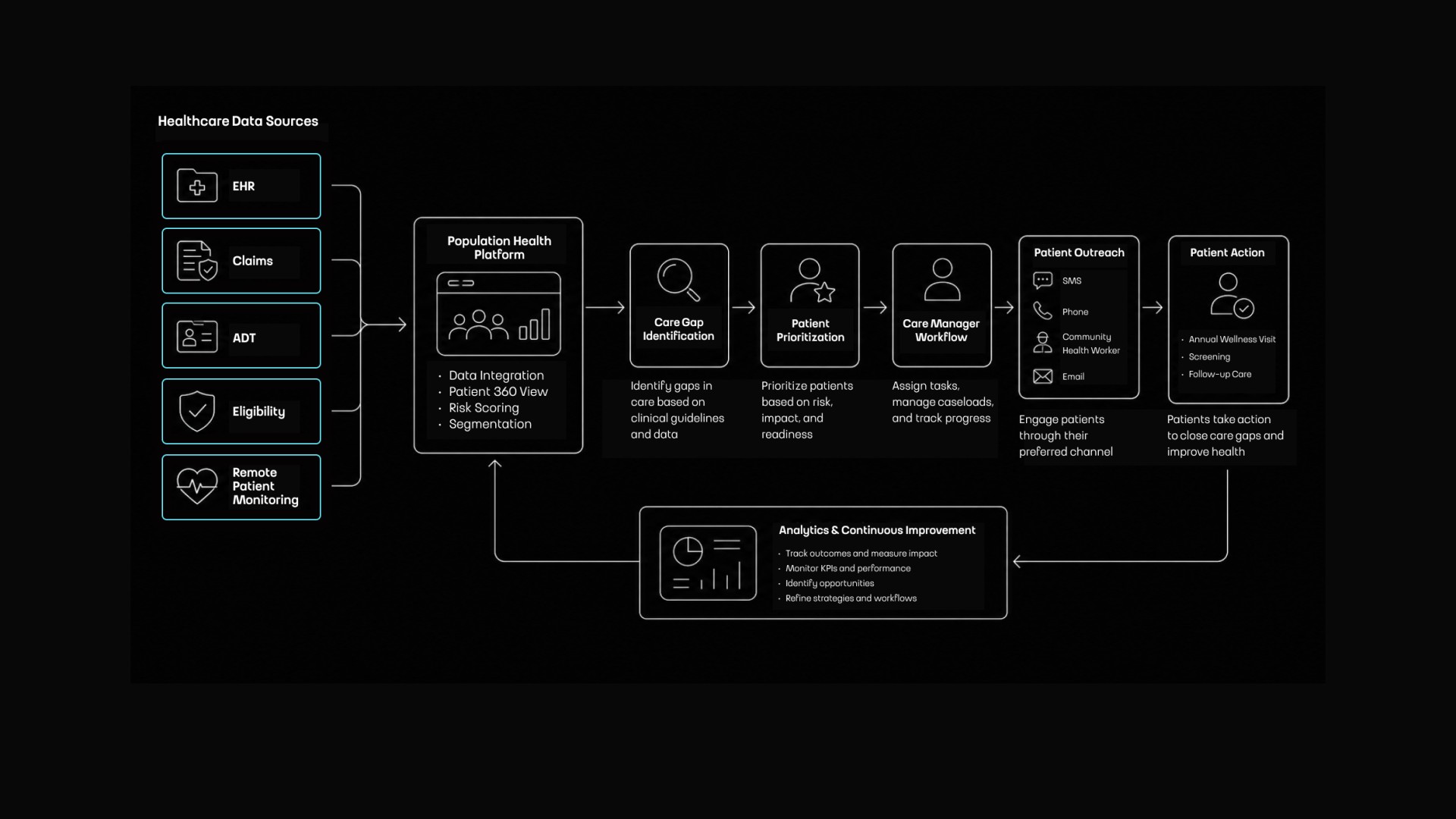
It receives information from multiple healthcare systems. It identifies patients who may need attention. It prioritizes interventions. It supports care managers with the information they need. It measures whether interventions actually improve outcomes.
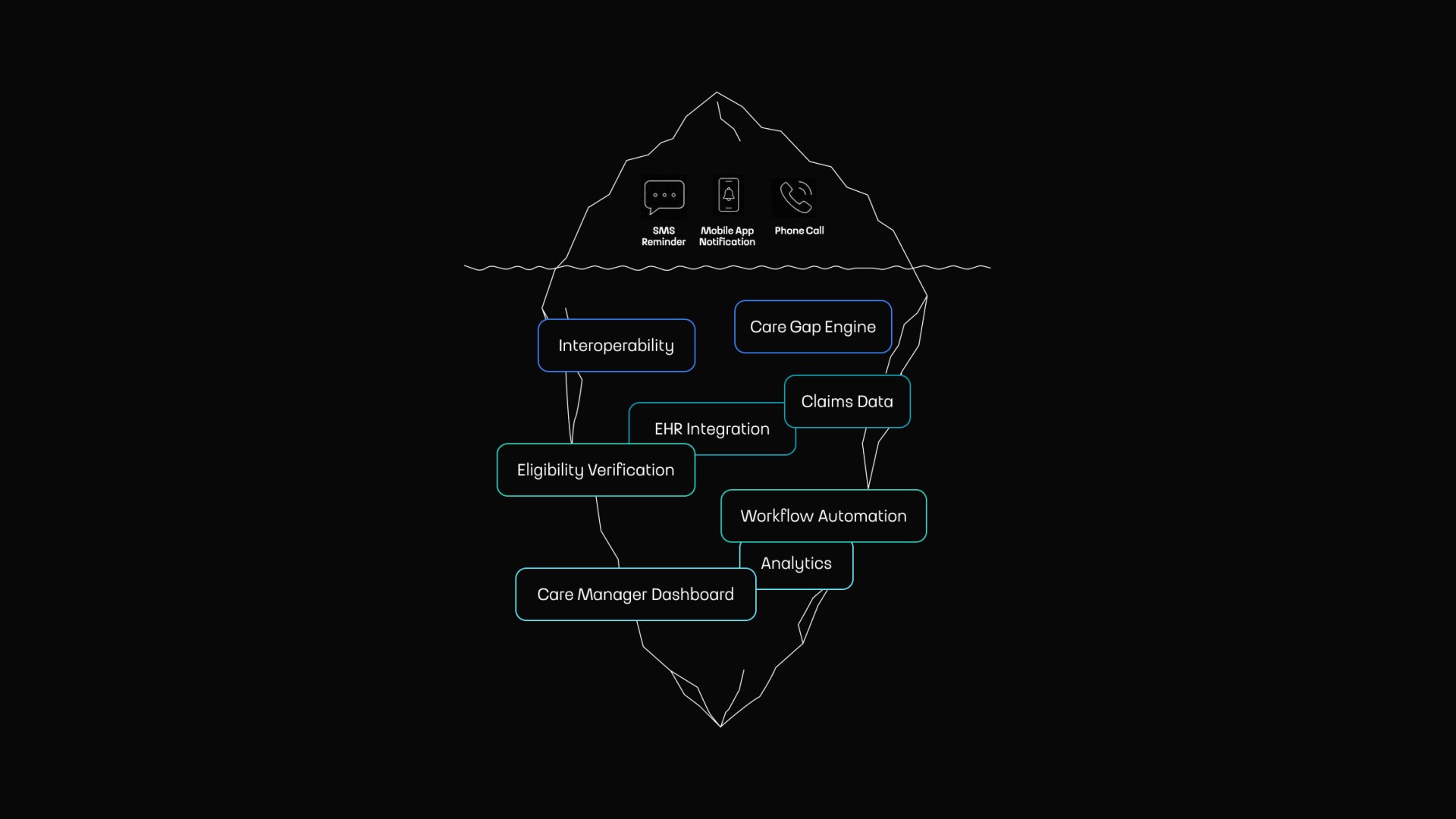
Patients may only experience a text message, a phone call, or a reminder. Behind that simple interaction is an ecosystem of clinical workflows, interoperability, analytics, and care coordination.
That's an important distinction.
When people think about digital health, they often picture the application the patient sees. In reality, the patient interface is only a small part of the overall system. Most of the complexity lies in the operational platform that healthcare professionals rely on every day.
Scale Changes Everything
Many digital health products begin with a relatively small number of patients.
At that stage, manual processes still work. Care coordinators can review patient lists personally. Clinical staff know many patients by name. Workflows remain manageable.
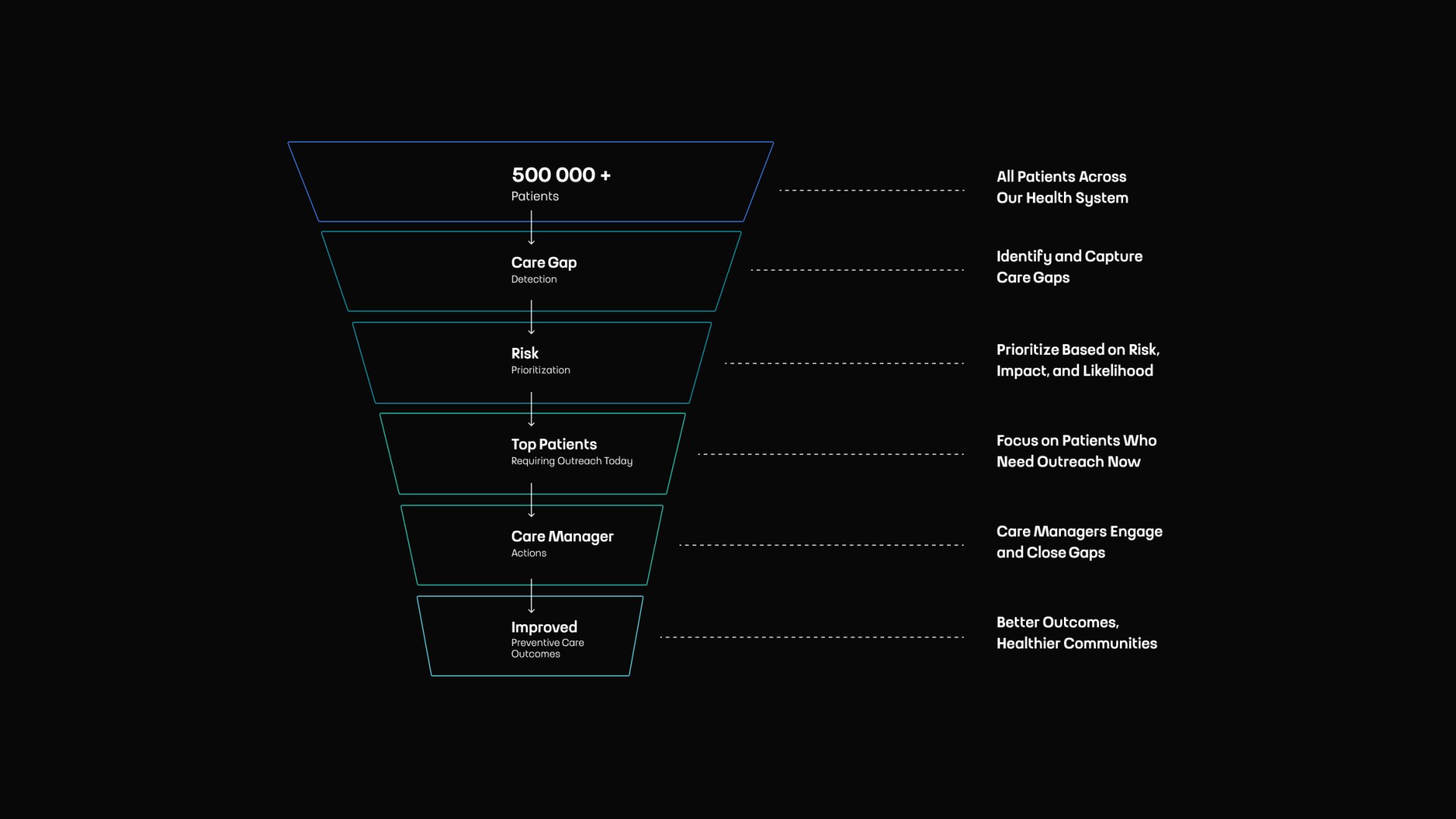
That changes quickly as organizations grow. When a platform supports hundreds of thousands of members, manual prioritization becomes impossible.
No care management team can review every patient every morning. No clinician can manually determine who requires outreach first.
Software has to make those decisions, not by replacing healthcare professionals, but by helping them focus their attention where it can have the greatest impact.
That shift - from manual coordination to intelligent prioritization - is one of the defining characteristics of population-scale healthcare technology.
Identifying Care Gaps Before They Become Clinical Problems
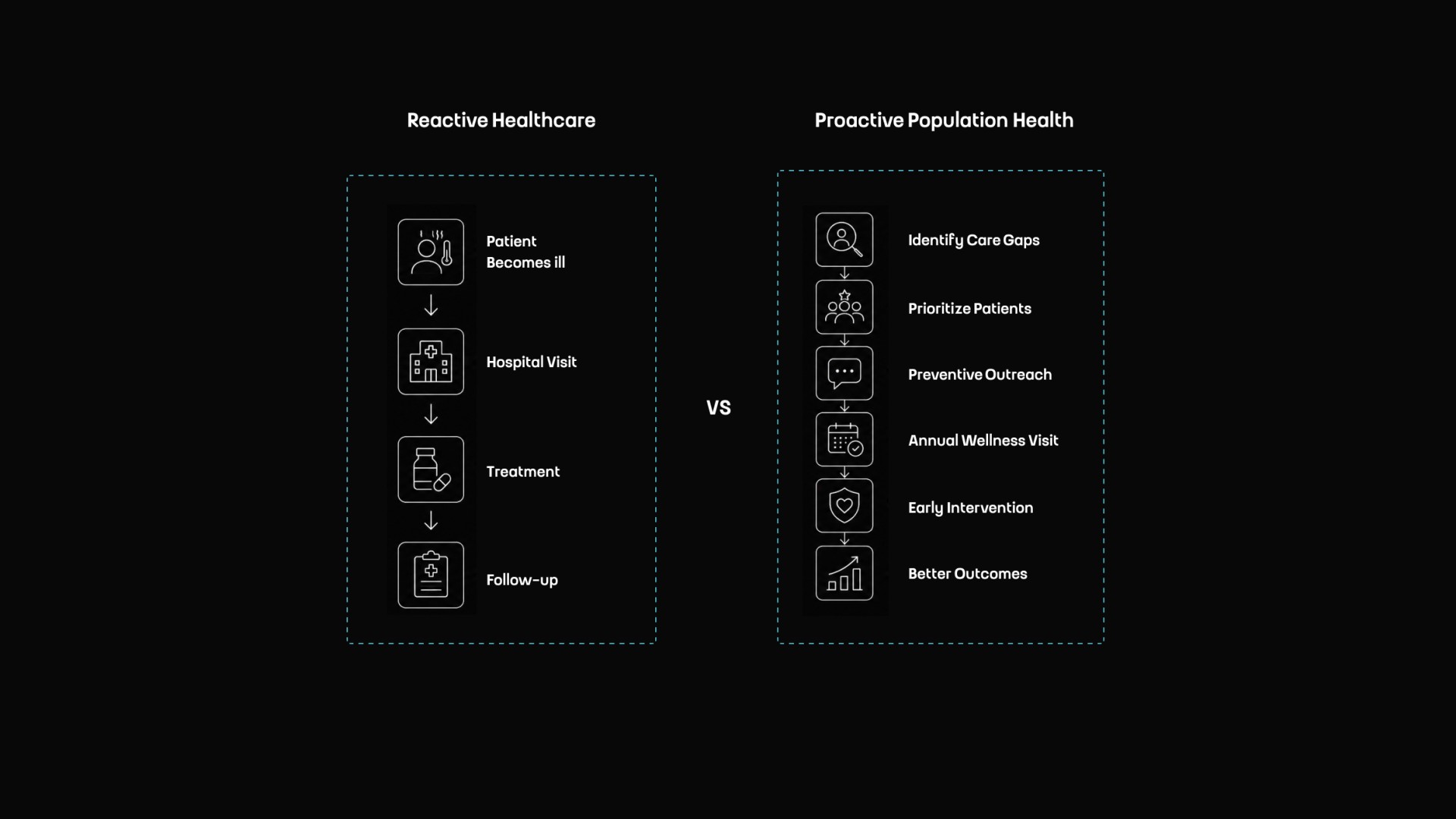
One of the biggest misconceptions about population health is that it starts when a patient becomes sick.
In reality, the goal is to intervene much earlier.
Healthcare organizations constantly ask questions like:
- Which patients are overdue for their Annual Wellness Visit?
- Who hasn't completed a recommended preventive screening?
- Which patients haven't responded to previous outreach?
- Who was recently discharged from the hospital and requires follow-up?
- Which chronic disease patients haven't submitted recent health data?
Each unanswered question represents a potential care gap.
Left unaddressed, these gaps can lead to delayed diagnoses, avoidable emergency department visits, hospital readmissions, and higher healthcare costs.
The challenge isn't knowing that these gaps exist. It's identifying them early enough - and across hundreds of thousands of patients.
As Charles explained during our conversation, one of the platform's primary objectives is to continuously identify patients who would benefit from preventive interventions rather than waiting until they require more intensive care. Instead of relying on manual reviews, the platform helps care teams prioritize outreach using real-time data and predefined clinical workflows.
The lesson extends far beyond Medicaid.
Whether an organization supports 5,000 patients or 500,000, patient engagement is significantly more effective when clinical need, rather than fixed schedules, drives outreach.
Annual Wellness Visits: More Than Just Another Appointment
During our discussion, Charles repeatedly highlighted the importance of Annual Wellness Visits (AWVs).
To someone outside the U.S. healthcare system, they may sound like routine check-ups. In practice, they're much more valuable.
Annual Wellness Visits create structured opportunities to assess a patient's overall health, identify emerging risks, update preventive care plans, and connect patients with additional healthcare services before more serious conditions develop.
From a population health perspective, they're also one of the most effective ways to engage patients.
A completed wellness visit often leads to:
- updated Health Risk Assessments,
- new preventive screenings,
- chronic disease management plans,
- specialist referrals,
- medication reviews,
- and stronger long-term relationships between patients and their care teams.
That means the goal isn't simply increasing appointment volume. It's creating a gateway into continuous care.
Charles described Annual Wellness Visits as one of the key workflows the platform supports, as they help healthcare organizations proactively engage patients rather than react once health problems become more severe.
This reflects a broader principle. The most successful patient engagement platforms aren't designed around isolated interactions. They're designed around healthcare journeys.
Technology Alone Doesn't Engage Patients
One of the most interesting moments in our conversation was the recognition that technology isn't always the answer.
Healthcare often focuses on automation.
Automated reminders. Automated emails. Automated SMS campaigns. Automated workflows. Automation certainly improves efficiency.
But it doesn't replace human relationships.
Some patients respond immediately to a text message. Others require a phone call.
Some need support from a care manager who understands their medical history.
Others benefit most from a Community Health Worker who understands the challenges they're facing outside the healthcare system. Charles explained that digital engagement and human engagement work together rather than competing with one another.
Technology identifies opportunities. People build trust.
That combination matters most when supporting vulnerable populations, where barriers to healthcare often extend beyond clinical needs.
The takeaway is simple. Patient engagement platforms shouldn't be designed to replace care teams. They should help care teams spend more time with the patients who need them most.
The Hidden Layer Patients Never See
When patients interact with a healthcare platform, the experience often appears straightforward.
They receive a reminder. They complete an assessment. They attend an appointment.
What they don't see is everything happening behind the scenes. Before that reminder was sent, multiple systems may have exchanged information.
Eligibility data may have been verified.
Hospital admission records were updated. Clinical history reviewed. Care gaps identified.
Tasks assigned to care managers. Every patient interaction depends on a much larger operational platform that connects healthcare organizations, which often use completely different technologies.
Charles discussed how this ecosystem relies on integrating data from Electronic Health Records, eligibility systems, admissions and discharge notifications, claims information, and other healthcare applications to support coordinated care.
Without that level of interoperability, personalized patient engagement simply isn't possible. For software engineers, this is an important reminder.
The hardest part of healthcare technology usually isn't designing the mobile application. It's integrating fragmented healthcare systems into a single operational workflow that clinicians can actually rely on.
Engineering Lessons from Population-Scale Healthcare
Working on healthcare platforms at this scale changes how you think about software.
In many industries, performance is measured by page load times, feature velocity, or user growth.
In healthcare, success is measured differently. Did more patients complete preventive screenings?
Were care managers able to prioritize the right patients? Did clinicians have the information they needed at the right moment? Did the technology reduce the administrative burden rather than add to it? Those questions fundamentally change how software should be designed. The platform is no longer just an application. It becomes part of the healthcare delivery process itself.
That realization has shaped how we approach healthcare engineering at Touch4IT.
Building successful digital health products isn't just about delivering features. It's about understanding clinical workflows, integrating complex healthcare ecosystems, and creating technology that helps both patients and healthcare professionals achieve better outcomes.
Five Lessons Healthcare Organizations Can Learn from Illinois Medicaid
Every healthcare system is different.
The U.S. Medicaid program isn't directly comparable to healthcare systems in Europe, and providers and reimbursement models don't operate in exactly the same way.
Yet the engineering challenges are surprisingly similar.
Whether you're supporting 20,000 patients or 2 million, healthcare organizations eventually encounter the same questions.
How do you identify patients who need attention? How do you prioritize limited care management resources? How do you coordinate data across dozens of disconnected systems? How do you keep patients engaged long after the initial consultation? And how do you measure whether any of those interventions actually improve outcomes?
Our conversation with Charles reinforced five lessons that extend well beyond Medicaid.
First, patient engagement is an operational capability, not a communication channel.
Sending reminders is easy. Designing workflows that consistently move patients toward better health is considerably harder.
Second, preventive care depends on prioritization.
Healthcare organizations can't give every patient the same level of attention every day. Technology helps identify where human intervention will have the greatest impact.
Third, healthcare is still fundamentally human.
Automation improves efficiency, but it doesn't replace trust. The most successful engagement strategies combine digital tools with care managers, nurses, and community health workers who understand each patient's situation.
Fourth, interoperability isn't optional.
Patient engagement only works when healthcare professionals have access to complete, timely, and reliable information. Without connected systems, even the best-designed workflows quickly break down.
Finally, software should support healthcare, not complicate it.
The most successful digital health platforms rarely attract attention because of flashy interfaces or AI features. Instead, they quietly help clinicians make better decisions, reduce administrative work, and improve patient outcomes. Patients may never notice the engineering behind the platform. Healthcare professionals certainly do.
Final Thoughts
Healthcare organizations don't struggle because they lack digital tools.
They struggle because turning technology into meaningful patient engagement is far more difficult than building another application. Our experience supporting BigHeart over the past six years has shown that successful patient engagement isn't created through a single feature or communication channel.
This article highlights some of the lessons we've learned along the way. If you'd like to see how the platform was designed, the technologies involved, and the outcomes it helped achieve, explore our BigHeart Case Study.
It's the result of thoughtfully designed workflows, an interoperable healthcare systems, and technology that supports clinicians rather than replaces them. As healthcare continues to move toward preventive, value-based models of care, these capabilities will become even more important.
The organizations that succeed won't necessarily be the ones with the most features. They'll be the ones that consistently help patients take the next step in their healthcare journey.
Planning a patient engagement or population health platform?
Whether you're building a new digital health product, modernizing an existing healthcare platform, or integrating complex clinical systems, the engineering challenges go far beyond software development.
At Touch4IT, we've spent more than six years helping develop large-scale healthcare platforms supporting hundreds of thousands of patients. From interoperability and care management to patient engagement and workflow automation, we help healthcare organizations turn ambitious ideas into scalable products.
Contact our healthcare engineering team.
FAQs
1. What can healthcare organizations learn from large-scale Medicaid patient engagement?
Large-scale Medicaid programs demonstrate that successful patient engagement depends on identifying care gaps, prioritizing patients based on clinical need, coordinating care across multiple systems, and measuring outcomes—not simply sending appointment reminders. These principles apply to healthcare organizations of all sizes.
2. Why is patient engagement more difficult at population scale?
As patient populations grow, manual outreach becomes impossible. Healthcare organizations need digital platforms that automatically identify patients who need intervention, prioritize care teams' workloads, and coordinate communication across multiple channels, and track outcomes over time.
3. What role does technology play in improving patient engagement?
Technology enables healthcare organizations to identify care gaps, automate workflows, integrate clinical data, and support care teams with real-time insights. However, technology works best when combined with human care managers, nurses, and community health workers who build trust with patients.
4. Why is interoperability essential for population health?
Population health platforms rely on data from Electronic Health Records (EHRs), claims systems, hospital admission and discharge notifications, laboratory systems, and remote patient monitoring devices. Interoperability ensures this information is available in one place, enabling care teams to make informed decisions and coordinate patient care effectively.
5. Can healthcare organizations outside the United States apply these lessons?
Yes. While reimbursement models differ between countries, healthcare organizations worldwide face similar challenges around patient engagement, care coordination, preventive care, interoperability, and workflow automation. The engineering principles behind scalable digital health platforms remain largely the same.
6. How can Touch4IT help healthcare organizations build scalable patient engagement platforms?
Touch4IT partners with healthcare providers, insurers, and digital health companies to design and develop patient engagement platforms, care management solutions, interoperability integrations, and population health applications. Our experience includes supporting large-scale healthcare platforms serving hundreds of thousands of patients.