How Healthcare Reimbursement Works in the US


For digital health companies entering the United States, healthcare reimbursement in the US can determine whether a clinically useful product becomes a sustainable business.
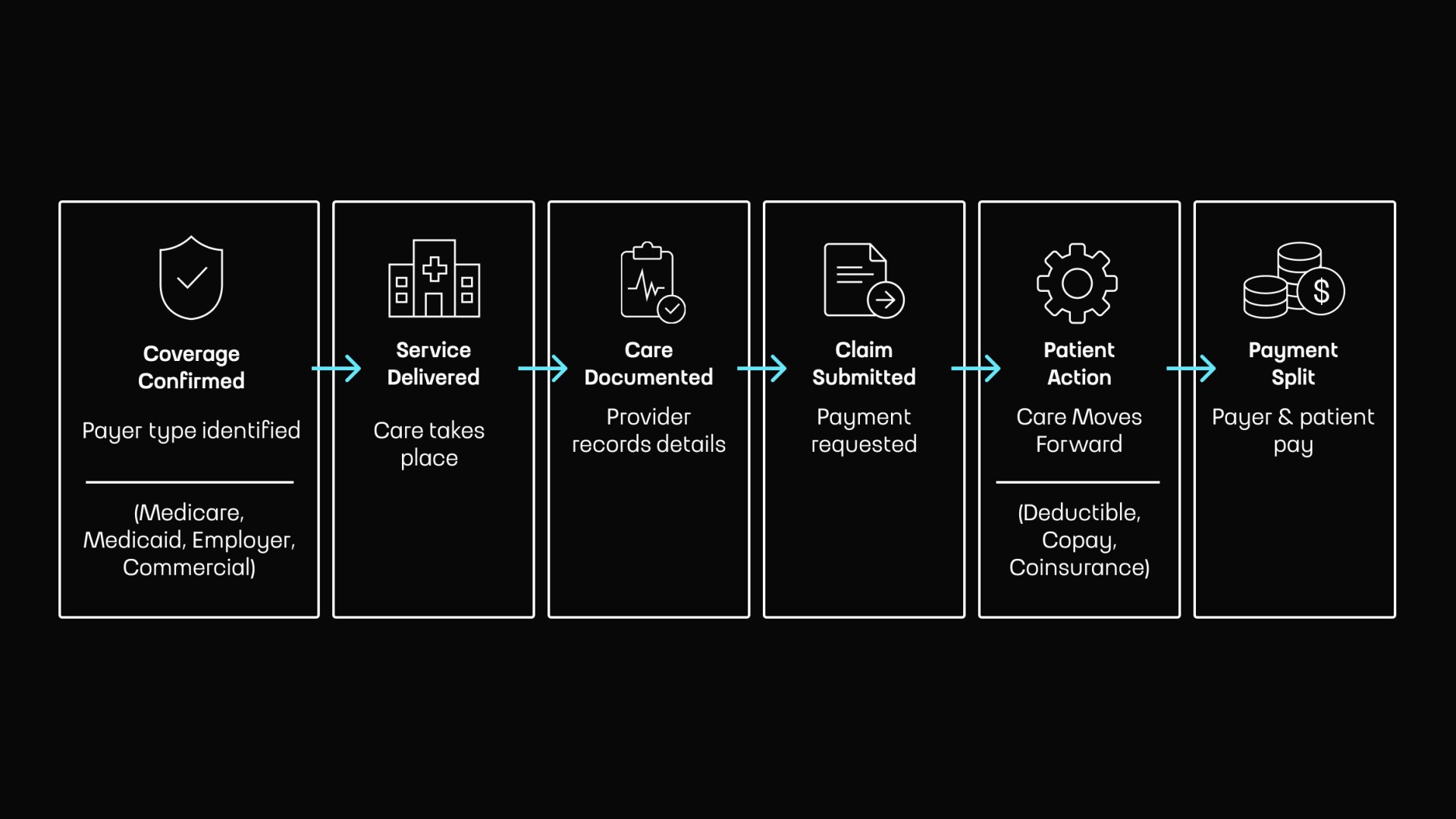
A patient may receive a service from a physician, but the physician is only one participant in the financial process. An employer may sponsor the patient's insurance. A commercial health plan may administer the coverage. Medicare or Medicaid may finance care for another patient. The patient may still be responsible for part of the cost. The provider then needs to document the service in a way that supports payment.
The situation becomes more complex when healthcare organizations are paid to manage populations rather than individual visits. A provider may receive recurring payments to manage a group of patients, receive a bundled payment covering several services, or participate in an arrangement where financial performance depends partly on cost and quality.
These distinctions matter for digital health companies because the payment model influences what the product needs to support. A telehealth platform built around reimbursable consultations has different requirements from a remote care program operating under a population health contract. A company selling to health plans may need to demonstrate changes in utilization and cost, while another company may depend on individual clinical activities generating reimbursable claims.
Understanding who pays, what they pay for, and what evidence they require is therefore an important part of building for the US healthcare market.
In a traditional reimbursement process, coverage is confirmed before care is delivered, the service is documented and coded, and a claim is submitted to the payer for review and payment. The payer determines what it will cover and what, if anything, the patient must pay. However, not all healthcare payment is tied to an individual claim. Population-based and value-based arrangements may instead pay organizations to manage patients over time or link financial performance to cost and quality.
About This Article
This article draws on practical lessons from Touch4IT's long-term work with US healthcare organizations, including BigHeart and MyOwnDoctor. That experience has given our team direct exposure to healthcare software operating within Medicaid, value-based care, care management, telehealth, and other US healthcare workflows.
Who Pays for Healthcare in the United States?
No single payer is responsible for healthcare across the United States. Several forms of public and private coverage operate alongside one another.
Medicare is a federal health insurance program primarily serving people aged 65 and older, along with certain younger people who meet specific eligibility criteria.
Medicaid provides health coverage to eligible populations and is financed jointly by federal and state governments. Unlike Medicare, Medicaid programs are administered at the state level within federal requirements. This means Medicaid's structure matters nationally, while many practical details depend on the state where a healthcare company operates.
The Children's Health Insurance Program, usually known as CHIP, provides coverage for eligible children in families whose incomes are too high to qualify for Medicaid but who may not otherwise have affordable insurance.
Commercial insurance represents another major part of the market. Many Americans receive health coverage through their employer. Other people purchase individual insurance, including plans available through the Affordable Care Act marketplaces.
Military personnel, veterans, and their families may receive coverage or care through programs such as TRICARE and the Veterans Health Administration.
A healthcare organization may serve patients covered by several of them, each with different contractual and reimbursement requirements.
For a digital health company, identifying the patient population is therefore only the beginning. It is also important to identify who provides the care, who administers and finances the coverage, and who is responsible for payment. These roles may be divided across providers, health plans, employers, government programs, and patients, so payment for a healthcare service may involve more than one party.
The Patient May Still Pay Part of the Cost
Having insurance does not necessarily mean that the insurer pays the full cost of every healthcare service.
Patients can have several forms of financial responsibility depending on their insurance plan.
A deductible is the amount the patient generally pays for covered healthcare services before the insurance plan begins paying under the plan's terms.
A copayment is usually a fixed amount associated with a covered service, such as a physician visit.
Coinsurance typically requires the patient to pay a percentage of the allowed cost of a service while the insurer pays the remaining covered portion.
These arrangements mean that a healthcare transaction can involve both payer reimbursement and direct patient responsibility. For example, a patient may gradually meet a deductible through healthcare visits, after which the insurance plan begins contributing according to the patient's coverage.
This has practical consequences for healthcare software. Eligibility and benefits can affect what the patient expects to pay. Patient responsibility may need to be calculated, communicated, and eventually reconciled with what the payer actually covers.
For a digital health company, reimbursement therefore begins before money changes hands. The product may need to understand the patient's coverage before delivering the service.
Fee-for-Service Remains an Important Starting Point
The easiest payment model to understand is fee-for-service.
A healthcare service takes place, and payment is associated with that service. A physician consultation, therapy session, or another eligible clinical activity can create a reimbursable event when the requirements are satisfied.
The provider then needs documentation supporting what happened, why the service was medically appropriate, who delivered it, and other information required by the payer.
Depending on the service and payer, a claim may require diagnosis codes, procedure codes such as CPT or HCPCS, provider identifiers, place and date of service, modifiers, and documentation supporting medical necessity.
This creates a relatively direct relationship between healthcare activity and revenue. More eligible services can generate more claims and potentially more reimbursement.
On the other hand, some payment arrangements pay organizations to manage patients over time or evaluate performance across an entire population.
For digital health companies, fee-for-service can matter most when the business model depends on enabling reimbursable clinical activities.
A telehealth company may facilitate physician consultations. A behavioral health platform may support therapy sessions. A remote care company may enable activities that qualify for reimbursement when applicable requirements are satisfied.
In these situations, product design and reimbursement become closely connected because the software has to support the clinical workflow and capture the information needed to document the activity.
Capitation Changes What the Organization Is Being Paid For
Capitation moves away from paying separately for every individual service.
Under a capitated arrangement, a healthcare organization may receive a predetermined payment associated with caring for a patient or defined population over a particular period.
A related structure is a per-member-per-month payment, often abbreviated as PMPM. Rather than waiting for each healthcare activity to generate revenue, an organization receives recurring payments tied to covered members. PMPM describes how the payment is calculated, while the contract determines which services and financial responsibilities are included. Services outside the arrangement may continue to be reimbursed separately through the usual claims process.
The economic incentive therefore changes significantly.
Under fee-for-service, delivering another eligible service can generate additional reimbursement. Under a capitated arrangement, the organization may instead be responsible for managing the patient's needs within the payment it already receives. Here, providing additional care does not necessarily generate additional reimbursement.
This makes efficient care management much more important.
Capitation also changes the information and functionality an organization may require from its technology. The system may need to identify the covered population, integrate data on prior and ongoing care, and support risk stratification to identify patients who may require additional intervention or who are at elevated risk for adverse health outcomes.
For example, a health plan or provider may need to identify patients with a recent emergency department visit or those requiring follow-up for a chronic condition. Patients also vary considerably in their expected healthcare needs and associated costs. Risk adjustment accounts for these differences within population-based payment models.
The product needs to help the organization understand and manage a population - that creates a very different technology requirement from software designed primarily around individual appointments.
Risk Adjustment Recognizes That Some Patients Cost More to Care For
Not every patient represents the same expected healthcare cost.
Someone with several chronic conditions will generally require more healthcare resources than a healthy individual. Payment models that ignore this difference could penalize organizations for serving populations with greater medical needs.
Risk adjustment is one mechanism used to account for differences in expected healthcare costs. Depending on the healthcare program and payment model, diagnosis information and other patient characteristics can contribute to risk scores that influence payments or financial benchmarks.
For healthcare technology companies, this illustrates why clinical documentation and financial workflows cannot always be treated as completely separate systems. The information captured during a clinical encounter can affect coding, reporting, risk measurement, and reimbursement downstream.
This becomes especially important for products supporting Medicare, Medicaid, health plans, and organizations participating in population-based payment models.
Bundled Payments Group Healthcare Around a Broader Unit of Care
Another approach is to pay for a defined group of healthcare services together.
Instead of reimbursing each activity independently, a bundled arrangement can tie payment to a broader episode or package of care.
This introduces another important concept for healthcare software: an episode of care.
A patient can have many individual encounters related to the same health condition. A pregnancy, for example, can involve physician appointments, laboratory work, imaging, and other interactions over several months. For certain analytical and payment purposes, those activities can be considered together rather than as unrelated events.
Grouping encounters into episodes matters when organizations need to evaluate the cost and performance of care tied to a particular condition or value-based contract.
This means software may need to understand more than individual appointments. It may need to connect multiple clinical activities to the same episode and enable analysis of total care delivered across that period.
We will explore episodes of care separately because the concept has implications far beyond reimbursement alone.
Shared Savings Connects Payment With Healthcare Cost
Shared savings introduces another financial model.
Instead of receiving payment solely because a particular service occurred, an organization can share in the financial upside when the cost of caring for a population performs favorably against an agreed benchmark, subject to the rules and quality requirements of the specific arrangement.
If a provider organization can show that its approach reduced healthcare spending relative to the expected cost, an agreement may allow it to share part of those savings.
Consider a remote patient monitoring program designed to identify deterioration earlier among patients with chronic conditions. If the organization can demonstrate that the program reduced avoidable utilization while maintaining the required quality standards, those results may become relevant under certain value-based or shared savings arrangements.
Value-based reimbursement depends on demonstrating performance under the terms of a particular contract.
Reimbursement and Value-Based Care Are Closely Connected
US healthcare has increasingly experimented with payment approaches intended to connect financial incentives with quality, outcomes, and efficient use of healthcare resources.
This is commonly discussed under the broad term value-based care.
The practical arrangements can vary considerably. Some organizations may continue receiving fee-for-service payments while also participating in quality incentives. Others may receive population-based payments. Some contracts introduce shared savings, while others may eventually place greater financial risk on the organization responsible for managing the population.
For digital health companies, the relevant question is what the specific contract requires the healthcare organization to demonstrate.
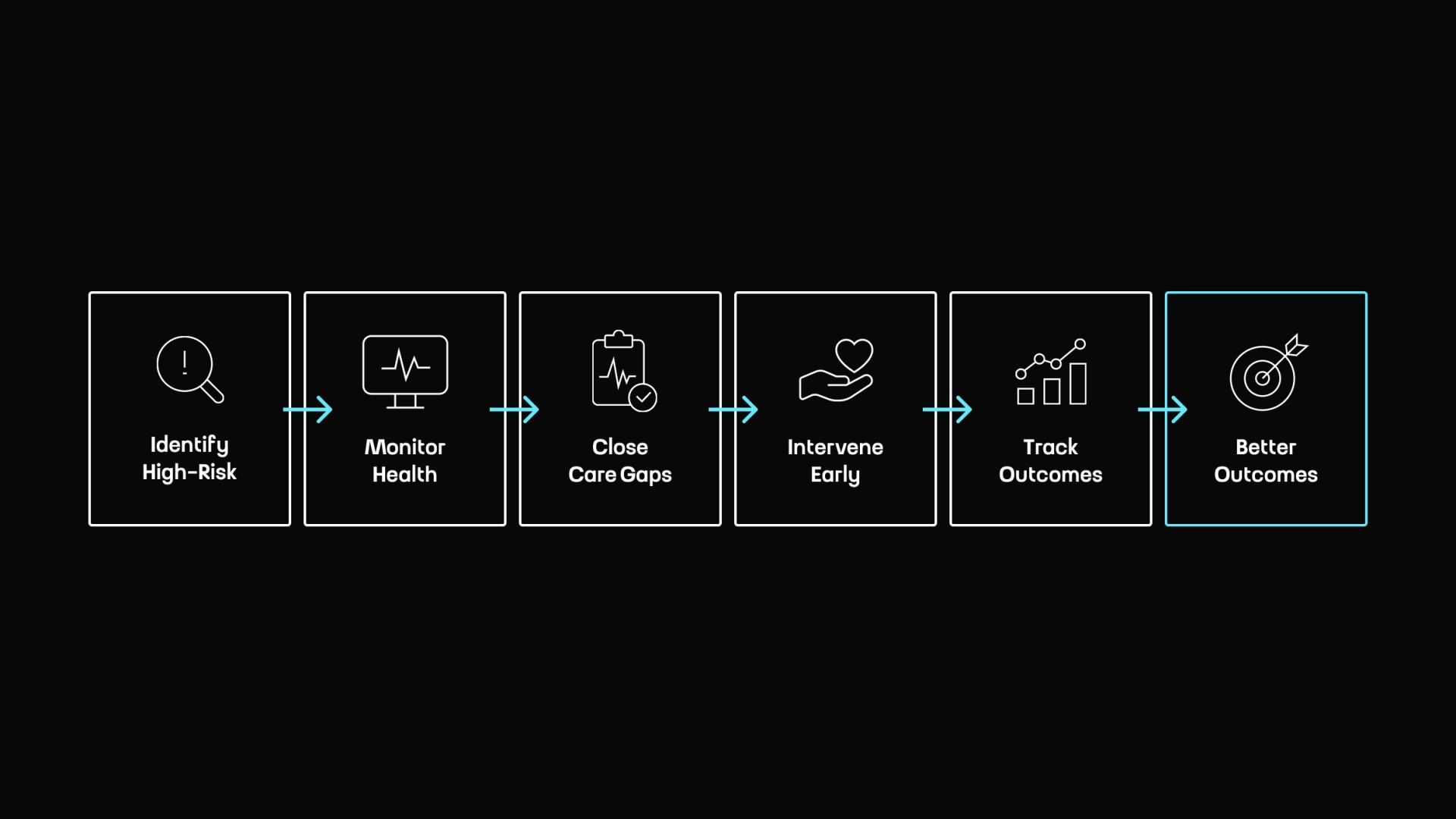
A product supporting a fee-for-service workflow may need strong documentation and billing functionality. A product supporting population health may need patient stratification, care gap management, and longitudinal reporting. A solution participating in a shared savings model may need to connect interventions with utilization, cost, and quality data.
The payment model therefore influences what evidence the software needs to produce.
Reimbursement Does Not Always Mean Billing a CPT Code
This distinction matters especially for digital health companies.
Healthcare businesses sometimes approach the US market by asking a narrow question:
Which billing code can we use for our product?
That can be relevant, but it does not describe every viable healthcare business model.
Reimbursement doesn't always require a digital health company to submit a claim. A program may be funded through a direct contract with a payer, employer, provider organization, or government entity, or through a broader population-based or value-based arrangement.
The technology company may also support providers that generate reimbursable services without billing for those services itself. In these models, the product creates value by helping the customer deliver care, manage a population, or improve cost and quality performance.
Preventive Care Creates an Interesting Economic Case
The relationship between prevention and healthcare spending is particularly relevant for health plans and government programs responsible for large populations.
Large Medicaid populations illustrate why payers and care organizations invest in preventive care and patient engagement. Identifying care gaps and helping patients complete appropriate preventive services can be important parts of population health management.
For the organization paying for healthcare, this creates an economic reason to invest in engagement and prevention even when the engagement activity itself is not a conventional physician visit.
A payer may therefore care about technologies that improve patient engagement, identify care gaps, support preventive care, coordinate services, or reduce avoidable utilization.
This helps explain why some digital health products create value several steps away from the eventual claim.
Their economic contribution may come from changing what happens to the patient later.
Reimbursement Changes What Healthcare Software Needs to Measure
Once payment depends on more than individual services, healthcare software must measure more than individual encounters.
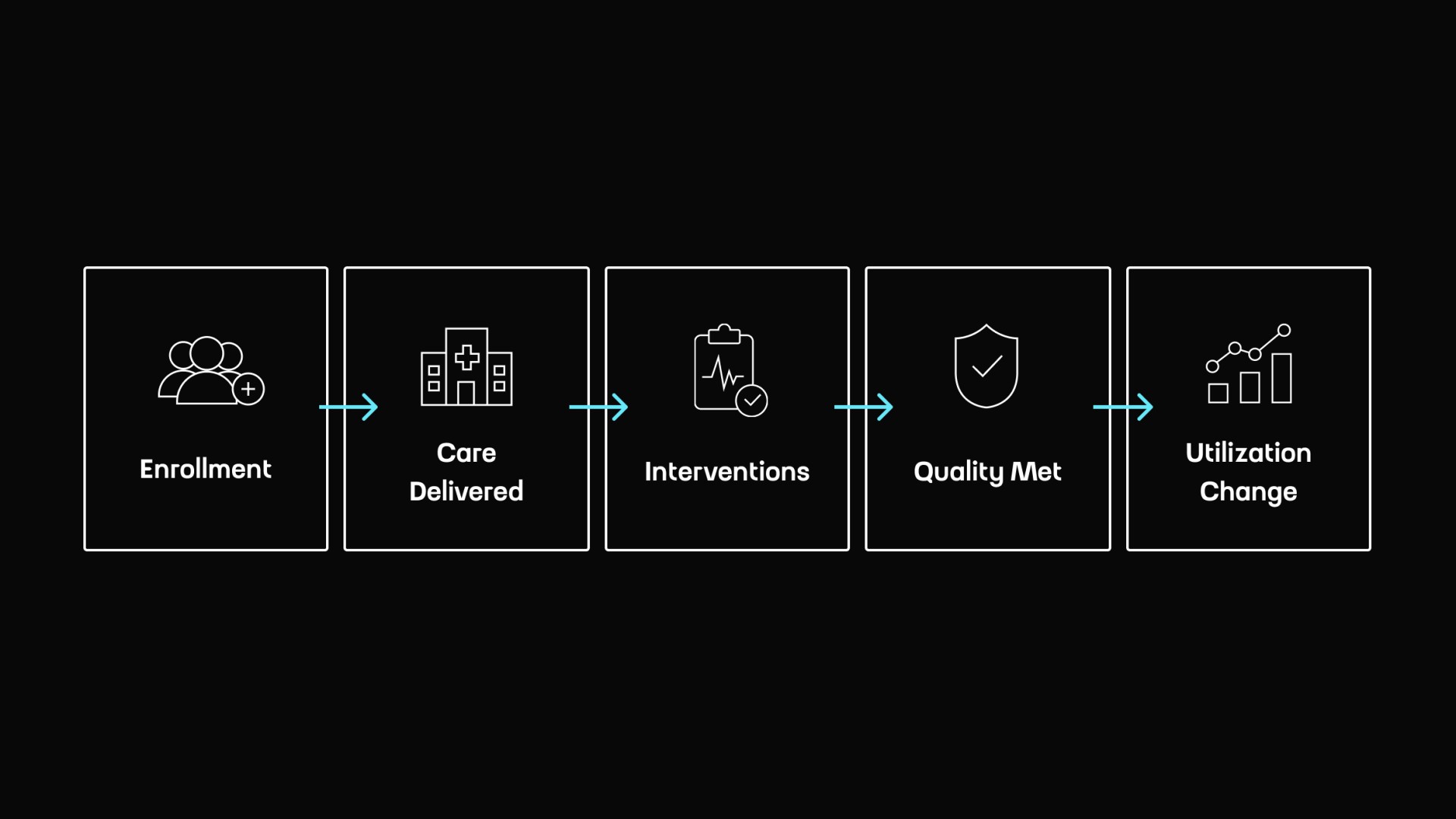
Population-based contracts may require an organization to show who was eligible or enrolled, what care and interventions occurred, whether quality requirements were met, and how healthcare utilization or costs changed.
Shared savings and risk-based arrangements may also require claims and clinical data to evaluate financial performance and population health.
The data captured during care can also directly affect reimbursement. Depending on the service and payment model, the system may need to record diagnosis codes, CPT or HCPCS service codes, provider information, dates of service, referrals, completed visits, and other information needed for billing, reporting, or contract performance.
Product design can improve workflow and data quality by guiding documentation and using available data to prompt timely staff action, such as preparing for scheduled encounters, completing assessments, closing care gaps, or addressing an identified social need.
These requirements need to shape the product from the beginning. If reimbursement or contract performance depends on specific services, interventions, outcomes, or utilization changes, the system must capture those events in a structured, reliable way.
A dashboard can only report what the product has collected, so reimbursement and reporting requirements can influence the workflow, data model, and product architecture long before a report is built.
Why Digital Health Companies Should Understand Reimbursement Before Building
A technically impressive healthcare product can still struggle commercially if there is no clear path between the value it creates and the organization willing to pay for that value.
Before entering the US market, a digital health company should understand the financial environment surrounding its intended use case. Some questions to consider:
- Who benefits economically when the product works?
- Who controls the healthcare budget affected by the product?
- Is the relevant activity reimbursable?
- Does the provider need to submit a claim?
- Could the product support an existing population-based payment?
- Does the buyer care about cost reduction, quality improvement, additional reimbursable activity, or operational efficiency?
- What information will the buyer need to prove that value?
These questions can change the product roadmap.
A company may discover that it needs eligibility information before a patient can enter a workflow. Clinical documentation may need to capture specific information. Reporting may need to demonstrate completed interventions rather than product usage. Payer data may be necessary to understand downstream utilization.
Reimbursement therefore should not sit exclusively with the commercial team. Product and engineering teams need to understand the payment model because parts of it eventually become software requirements.
From Healthcare Activity to Healthcare Economics
The US reimbursement system becomes easier to understand when you consider healthcare activity and healthcare economics together.
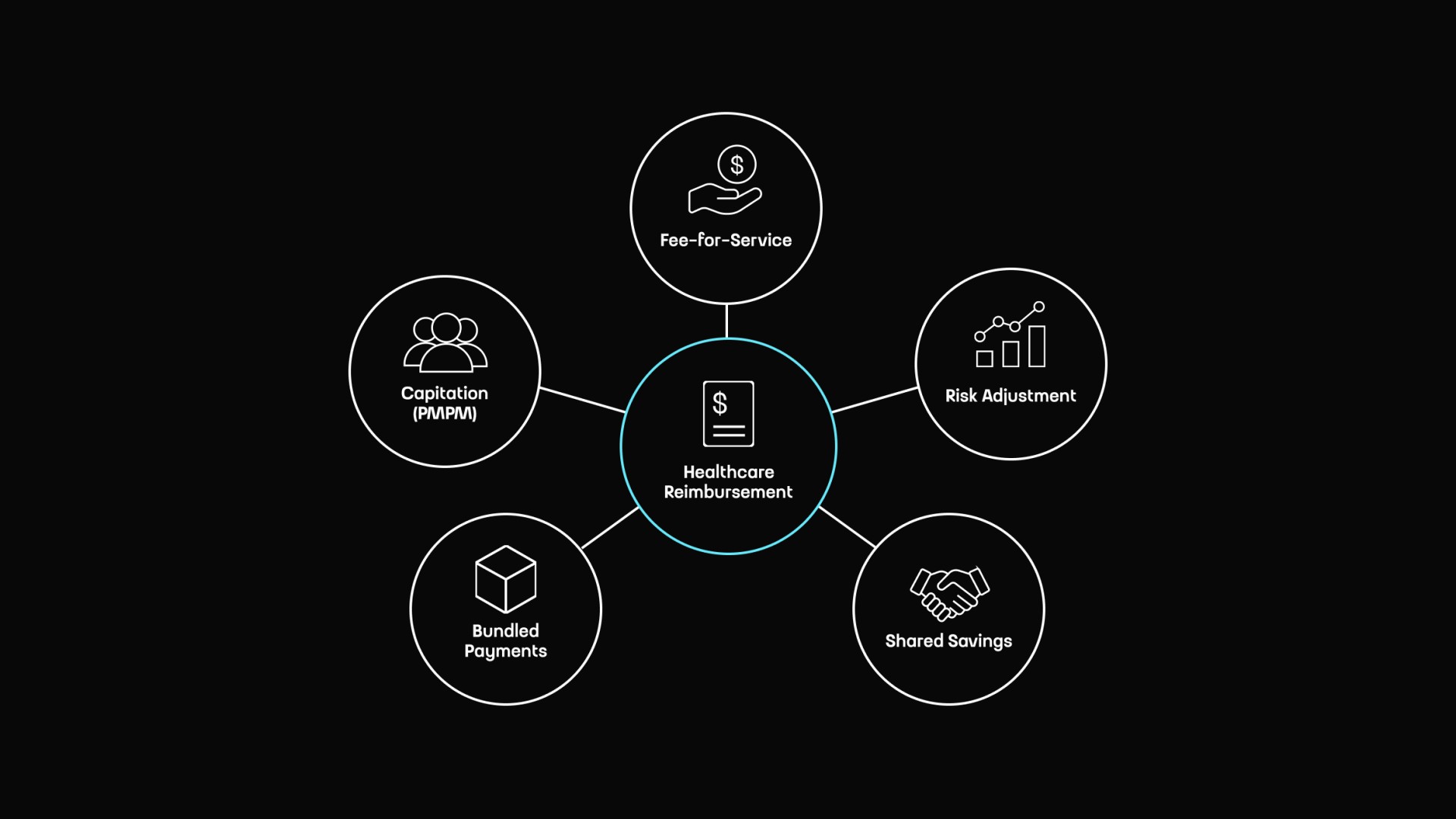
Fee-for-service connects payment closely with individual healthcare services.
Capitation and recurring population payments incentivize managing patients over time. Bundled payments group related services around a broader unit of care. Shared savings arrangements can connect financial rewards with cost performance and quality.
Risk adjustment attempts to account for differences in the expected cost of different patient populations. None of these models operates in isolation from technology. Each requires information about patients, services, diagnoses, providers, outcomes, or costs.
For digital health companies, understanding the payment model helps explain why American healthcare software often needs functionality that may initially appear unrelated to the core product.
The software is participating in a healthcare business model as well as a clinical workflow.
Final Thoughts
Healthcare reimbursement in the United States is complex because many ways can finance care and many organizations are involved in paying for it.
A patient can be covered by Medicare, Medicaid, or commercial insurance and still have some financial responsibility. A provider may receive payment for individual services, manage patients under recurring payments, participate in bundled arrangements, or share financially in savings generated across a population.
For digital health companies, these models influence much more than pricing strategy. They can determine what patient information is required, how clinical activity must be documented, which integrations are necessary, and what the product needs to measure.
The next step is to understand how a specific healthcare service moves through that system after it occurs.
That requires looking at eligibility checks, clinical documentation, diagnosis and procedure codes, claims submission, payer adjudication, and remittance.
Building Digital Health Technology for the US Market?
Touch4IT has spent more than six years working with US healthcare organizations on technology supporting patient engagement, care management, telehealth, EHR functionality, healthcare integrations, and reporting.
Our healthcare engineering teams work with digital health companies that need to translate complex US healthcare workflows into reliable software.
If you are building or adapting a healthcare product for the US market, talk to Jan, our healthcare lead.
FAQ
1. How does healthcare reimbursement work in the US?
Healthcare reimbursement in the US depends on the patient's coverage and the payment arrangement between healthcare organizations and payers. Providers may be paid for individual services through fee-for-service reimbursement, receive recurring payments to manage a population, participate in bundled payment arrangements, or operate under value-based contracts that connect payment with cost and quality.
2. What is the difference between Medicare and Medicaid reimbursement?
Medicare is a federal health insurance program, while Medicaid is jointly funded by federal and state governments and administered by individual states within federal requirements. As a result, Medicaid reimbursement policies and programs can vary between states, while Medicare operates under a more centralized federal framework.
3. What is fee-for-service reimbursement in healthcare?
Fee-for-service is a payment model in which reimbursement is connected to individual healthcare services. A provider delivers an eligible service, documents the care provided, and submits the required information for payment. This differs from population-based models where organizations may receive payments to manage patients over a longer period.
4. What is PMPM in healthcare?
PMPM means per member per month. It refers to a recurring payment associated with each covered member during a defined period. PMPM arrangements are commonly used in population health and care management models where organizations may be responsible for coordinating or managing care rather than receiving payment only for individual services.
5. How does value-based care affect healthcare reimbursement?
Value-based care can connect financial performance with factors such as healthcare quality, utilization, cost, and population outcomes. Depending on the arrangement, organizations may participate in shared savings, population-based payments, or other financial incentives. This creates a need for reliable data that can demonstrate what happened across the patient population.
6. Why should digital health companies understand US healthcare reimbursement?
Reimbursement can directly influence a digital health product's business model and technical requirements. Depending on how customers are paid, a company may need to support eligibility checks, clinical documentation, reporting, population management, or payer integrations. Understanding the payment model early helps product and engineering teams build the functionality and data infrastructure healthcare organizations using the product need.